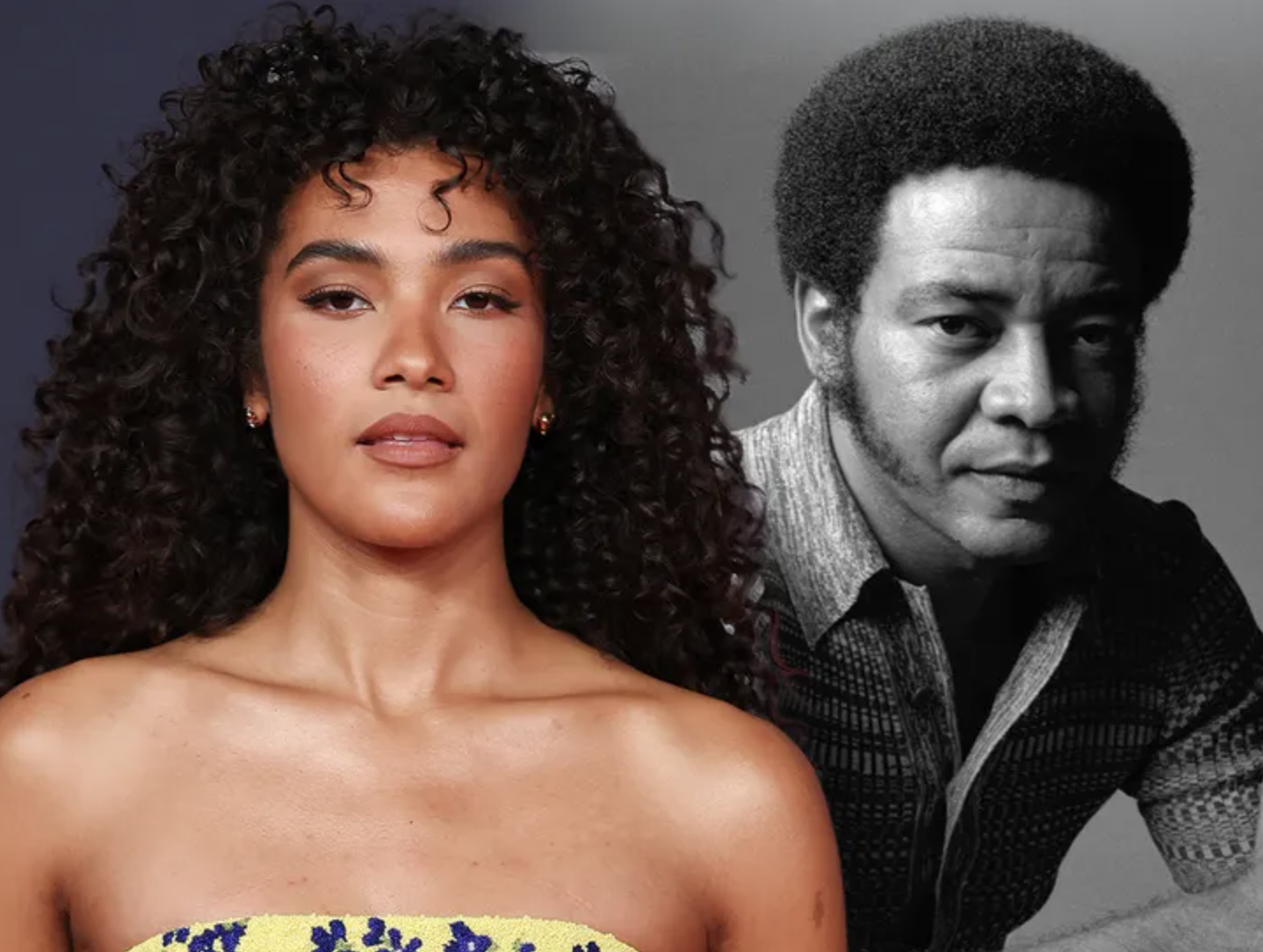
"Just the Two of Us" has been covered in reggae, rapped over by a movie star, sold French cheese,
gone viral on TikTok four decades after it charted, and piled up nearly two billion on-demand streams. In all that
time the music business has had exactly two ways to account for its influence: a negotiated credit, or a lawsuit.
On October 1, 2026, it got the second one, and a case number to go with it.
This report does three things. It sets out what the complaint against Olivia Dean's label and publishers
actually alleges, and what it doesn't. It puts a CPRS™ number on the cultural property underneath the song,
the part that keeps moving whether or not anyone's in court. And it makes the case that the fix isn't a better
lawyer or a luckier jury. It's infrastructure: a public ledger where a song's lineage is recorded before
the next writer hears it, so credit can be cleared instead of litigated.
01 — The Filing
One estate, three music companies, one melody
On Thursday, October 1, 2026, Mattie Music Group, doing business as Bleunig Music, filed a
seven-page complaint for copyright infringement in the U.S. District Court for the Central District of
California, Case No. 2:26-cv-11383. Mattie administers the estate of Bill Withers, who died in Los Angeles in March
2020 at 81. The company is named after his late mother, Mattie, and is run by his widow, Marcia Johnson. The
complaint alleges that "I've Seen It," the closing track on Olivia Dean's 2025 album The Art of
Loving, copied "substantial" parts of "Just the Two of Us," the 1981 Grover Washington Jr. record Withers
sang and co-wrote.
The defendants are the companies, not the artist. The caption names Capitol Records, LLC and
Universal Music Group, Inc. (Dean's label), Sony Publishing (US) LLC, dba Sony/ATV Songs
LLC (Dean's publisher), Kobalt Music Publishing America, Inc., dba Songs of Kobalt Music
Publishing (the publisher of co-writer Max Wolfgang), and Does 1 through 50, placeholders the plaintiff
says it will name once identified. Dean and her co-writers Bastian Langebaek and Max Wolfgang aren't defendants,
though, as reported, the complaint says all three "had a reasonable opportunity to encounter the original work."
Court RecordDocket · Document 1
Case U.S. District Court, Central District of California
2:26-cv-11383 Filed 10/01/26 · 7 pp.
Plaintiff California corporation, principal office in Los Angeles County
Mattie Music Group dba Bleunig Music
Counsel Clair G. Burrill, P.C. (Thousand Oaks) · JD Sanchez, Attorney at Law (Long Beach)
Burrill · Sanchez Attorneys for plaintiff
Defendants Capitol Records, LLC · Universal Music Group, Inc. · Sony Publishing (US) LLC dba Sony/ATV Songs LLC · Kobalt Music Publishing America, Inc. dba Songs of Kobalt Music Publishing
4 + Does 1–50 All Los Angeles County
Basis Copyright Act of 1976, 17 U.S.C. §101 et seq.; jurisdiction under 28 U.S.C. §§1331, 1338(a)–(b), 1367(a)
Copyright Federal question
Exhibit Attached to Document 1
Registration certificate Copyright Office
Filed
Oct 1
2026 · C.D. Cal. 2:26-cv-11383
Notice sent
Aug 17
Registration + similarities
Relief
Damages
+ permanent injunction
The sequence matters. Per the complaint, Mattie's representatives first heard "I've Seen It" in early August
2026, listened "several times," and hired musicologist Alexander Stewart, Ph.D. to compare the
two works. Stewart concluded the songs share "substantial similarities in protectable musical expression." On
August 17, Mattie sent each defendant written notice identifying the registration, the accused composition and
the similarities. The complaint says the defendants "continued reproducing, distributing, licensing, publicly
performing and commercially exploiting" the track. Six weeks later, Mattie filed. It seeks damages to be
decided at trial and an injunction that would permanently stop further exploitation.
"The number, character, and arrangement of the shared musical features are so striking that they support an
inference that the similarities did not result from coincidence, independent creation or reliance on common
musical elements."
Mattie Music Group complaint, as reported by The Guardian and The Hollywood Reporter
Read that sentence the way a rights analyst would. It's built to clear three defenses before anyone raises
them: coincidence, independent creation, and "common musical elements." That last one is the whole fight. The
complaint leads with the "distinctively protectable melody" because melody is the layer a
court will protect. The harmony this song is most famous for, as Section 02 shows, is a layer it almost
certainly won't.
The stakes on the other side are real, too. Dean won the Grammy for best new artist in February 2026 and,
by the time of filing, four Brit awards, including album of the year for The Art of Loving. On July
31, "Rein Me In," her duet with Sam Fender, became the longest-running No. 1 single in UK history. Representatives
for Dean, Capitol and Kobalt didn't immediately respond to press requests; Billboard reported that Kobalt
declined to comment.
Where this brief stands
A docket is not a verdict
Whether "I've Seen It" infringes "Just the Two of Us" is a question for the court. The Cultural Property
Rights Standard™ doesn't make copyright determinations, and nothing in this report asserts that Olivia Dean,
her co-writers, Capitol, UMG, Sony Music Publishing or Kobalt copied anything. What CPRS™ can do is describe
and score the property both sides are arguing over, and show why the industry has no instrument for it
short of litigation.
02 — The Lineage
A song that was already a family tree
"Just the Two of Us" didn't start with Withers. Ralph MacDonald and William Salter wrote the instrumental
track; MacDonald then called Withers, who wrote the lyrics. Washington's band on the record was a who's-who of
New York session players: Richard Tee on electric piano, Steve Gadd on drums, Eric Gale on guitar, Marcus
Miller on bass. Elektra released it on Washington's Winelight on October 24, 1980, and as a single in
February 1981. It sat at No. 2 on the Billboard Hot 100 for three weeks and won Withers, Salter and MacDonald
the Grammy for best R&B song.
The harmony has a lineage of its own. The song is in F minor, and its intro and verse progression can be
read as a double-time, reordered version of the first four bars of Bobby Hebb's 1966 standard "Sunny." That
reworked sequence is now one of the most taught progressions in popular music. Producers and teachers
commonly just call it the "Just the Two of Us" progression.
D♭VI
CV
Fmi · tonic
E♭mvii
A♭III
Intro/verse progression per the song's published composition analysis. The chorus inserts an
extra chord to descend chromatically from Fm to E♭m.
That's the paradox at the center of this case. The song's most culturally travelled feature is the one
copyright treats as a common building block. A progression can carry a song's name across a generation of
bedroom producers and never once generate a credit. Read as a rights history, the song's 45 years are a
timeline of which uses got written down, and how:
1966
"Sunny." Bobby Hebb's progression, the harmonic parent the song reorders. Lineage, not ownership.
1981
The record. No. 2 Hot 100, No. 2 Adult Contemporary, No. 3 R&B. Grammy, best R&B song. Three writers credited.
1983
"Just the Slew of Us." MacDonald is credited as writer/producer on the Bill Cosby parody theme. The derivative is papered.
1996
Toshinobu Kubota & Caron Wheeler. A reggae, then R&B, duet in Japan. Oricon No. 30. Withers, MacDonald and Salter keep their writing credit.
1998
Will Smith. A father-son rap built on the original. No. 2 in the UK, No. 20 in the US. Withers, Salter and MacDonald are credited co-writers. Credit by negotiation.
2009–
Caprice des Dieux. The song becomes the soundtrack of a French cheese brand's TV advertising for more than 15 years.
2020
TikTok. Withers dies in March. By late 2020 the song is trending on TikTok; Salter's granddaughter posts a tribute. It re-charts in Sweden and France.
2026
Keith Urban records it for Flow State, taking the song into country.
Oct 2026
Mattie Music Group v. Capitol et al. The alleged derivative is contested in federal court. Credit by litigation.
Withers saw this coming in his own words. Inducted into the Rock and Roll Hall of Fame by Stevie Wonder in
2015, he called it "an award of attrition":
"What few songs I wrote during my brief career, there ain't a genre that somebody didn't record them in."
Bill Withers — Rock and Roll Hall of Fame induction, 2015
He also knew what an unaccounted catalog felt like. Of his first label, Sussex, he said simply, "They weren't
paying me." He walked away from recording after 1985, worn down by label executives he called "blaxperts," and
in 2006 Sony Music returned his unreleased tapes to him. Marcia Johnson later took over direct management of
his publishing companies, with their children involved as adults. The estate suing today is the family
custodian of a catalog its author spent his career fighting to control.
03 — The Performance
Performance & certifications: a 1981 single with 2026 velocity
Before scoring anything, put the commercial record on the table. "Just the Two of Us" isn't a nostalgia
asset living off its chart run. It's a catalog standard that is still accelerating, and the
numbers below are what any honest negotiation, or any damages expert, would start from.
Peak · Hot 100
No. 2
1981 · three weeks
Parent album · US
2× Plat.
Winelight · 2M units
Spotify · both versions
1.16B
949.8M album + 209.4M edit
On-demand · all platforms
1.90B
≈1.26M equiv. album sales
Charts and the parent album
The single peaked at No. 2 on the Billboard Hot 100 in the week ending May 2, 1981, and held
there for three weeks behind "Morning Train (9 to 5)" and "Bette Davis Eyes." It also reached No. 2 Adult
Contemporary, No. 3 R&B and No. 18 on the Hot 100 year-end chart, and won the Grammy for best R&B song.
Its parent album, Grover Washington Jr.'s Winelight, peaked at No. 5 on the Billboard 200, won the
Grammy for best jazz fusion performance, and is certified 2× Platinum by the RIAA: two million
units in the United States alone.
| Release | Territory | Certification | Units |
|---|
| WinelightParent album | United States (RIAA) | 2× Platinum | 2,000,000 |
| WinelightParent album | Spain · UK · Austria | Platinum · Silver · Gold | 185,000 |
| Single"Just the Two of Us" | United Kingdom (BPI) | Platinum | 600,000 |
| Single"Just the Two of Us" | Germany (BVMI) | Gold | 300,000 |
| Single"Just the Two of Us" | Denmark · New Zealand | Platinum · 3× Platinum | 180,000 |
| Single"Just the Two of Us" | Italy · Spain | Gold · Gold | 65,000 |
| TOTAL | Certified units, album + single, ten certifications | 3,330,000 |
Streaming: the catalog's fastest-moving track
On Spotify, the album version has 949.8 million streams, ranked No. 8 among the most-streamed
tracks of 1980, and the single edit adds another 209.4 million: 1.16 billion combined. Across all audio
on-demand platforms, ChartMasters models the two versions at about 1.9 billion streams, the
equivalent of roughly 1.26 million album sales. The more telling number is velocity. The two versions draw
about 580,800 Spotify plays a day, and the album version alone, at 465,464 a day, now moves
faster than any other song Withers recorded, including "Ain't No Sunshine" and "Lovely Day."
Just the Two of Us both versions
580,837
Just the Two of Us album version
465,464
Ain't No Sunshine 1971
382,328
Daily Spotify streams, ChartMasters snapshot (play counts 7+ days old at capture). "Just the Two of Us" is credited to Grover Washington Jr. featuring Bill Withers.
At that pace, the album version crosses one billion Spotify streams in roughly 108 days, and
the two versions together cross two billion on-demand streams in about the same window, putting
both milestones in early 2027. Withers himself passed five billion Spotify streams across all credits on
September 2, 2026, and draws about 32 million monthly listeners across platforms.
Why the numbers matter to the dispute
The busiest song in the catalog is the one with the most fragmented title
The track generating the most daily demand in the Withers catalog is the one he doesn't headline. Spotify
lists it as a Grover Washington Jr. record featuring Withers; the composition is split three ways; the master
sits label-side. ChartMasters' own revenue model implies the two versions generate on the order of
$1.3 million a year in recorded-music streaming revenue alone, and none of it settles to a
single holder. When influence this active touches a new song, there is no single desk to clear it with.
That's the gap the docket is now standing in for.
04 — The Market Failure
Influence has no clearing house, so it clears in court
Every layer of this song has a system except the one that matters most. The recording has a label, ten
certifications and 3.33 million certified units between the single and its parent album. Its
streams are counted to the play: 1.16 billion on Spotify, about 1.9 billion across platforms. The composition
has registered writers, publishers and a
performing-rights trail. The covers have mechanical licenses. The ad campaign has a sync fee.
The cultural property itself has none of that. By that we mean the sound, the progression, the Withers vocal
signature, the "smooth soul" mood people reach for when they want a song to feel like this one. It has no
registry, no recorded lineage, no posted terms for interpolation, and no settlement layer. When a new song lands
near it, there's no instrument that lets a writer check the lineage, clear a use and credit the source in
advance. There's only the after-the-fact question of whether a musicologist, and then a jury, thinks the
similarities cross a line.
Economists would call this a market failure with a predictable symptom. When a good can't be licensed
cleanly, its value gets settled by the most expensive mechanism left standing, and in music that's litigation.
The track record shows how unpredictable that mechanism is:
- "Blurred Lines" (2015–2018). A jury found infringement of Marvin Gaye's "Got to Give It Up," and
the Ninth Circuit upheld a multimillion-dollar judgment. The industry read it as a warning that "feel" might
be ownable.
- "Dark Horse" (2022). The Ninth Circuit, the same appeals court that covers this case, threw out a
$2.8 million jury verdict against Katy Perry, holding the shared ostinato was built from unprotectable
elements.
- "Thinking Out Loud" (2023–2024). A jury cleared Ed Sheeran of copying "Let's Get It On," and in
November 2024 the Second Circuit affirmed in a related case that a common chord progression and rhythm
combination isn't protectable on its own.
Three cases, three outcomes, and in each one the originator's lineage was valued only by a verdict. That's
the failure. A song like "Just the Two of Us" generates influence continuously, but the system only checks the
ledger when someone sues. Most influence never reaches court, so it never gets recorded at all. The part that
does is settled in a binary: everything or nothing, years later, at enormous cost to both sides.
The two paths, side by side
Will Smith cleared it. The next writer has no window to clear through.
In 1998 Will Smith built a hit on "Just the Two of Us," and Withers, Salter and MacDonald were credited as
co-writers. That's the market working: a known derivative, a negotiated credit, revenue flowing to the
originators. But it only worked because the use was explicit and the parties sat down. For uses that are
closer to influence than interpolation, the industry offers no public lineage record and no posted terms. A
writer who wants to do the right thing has nowhere to look. A writer who doesn't faces no cost until a
complaint arrives.
Nobody in this story has to be a villain for the pattern to hold. Dean is one of the most celebrated new
writers in the world. Mattie is a family estate protecting a catalog its author fought to control. Sony,
Universal and Kobalt are doing what publishers and labels do. A failure with no designated perpetrator produces
no correction. It just repeats, one lawsuit at a time, while the influence that never reaches court moves
through the culture unrecorded.
Why CPRS™ matters here
The Cultural Property Rights Standard™ exists for exactly this gap. Copyright protects the melody and lyric,
and courts decide case by case where that protection ends. Trademark protects names and logos. Publicity law
protects against unauthorized use of a person's identity. None of them record the lineage:
the documented chain of influence that runs from "Sunny" through "Just the Two of Us" to everything that
borrows its feel.
CPRS™ closes it with two mechanics. The first is a Base Cultural Property Value (BCPV), a
score across five weighted dimensions (Cultural Influence 0.30, Consumer Conversion 0.25, Likeness &
Identity 0.20, Commercial Usage 0.15, Heritage & Lineage 0.10) that produces a comparable number. The
second is a Total Cultural Property Market Value (TCPMV), derived by applying sector-specific
Cultural Demand Coefficients to the observable commerce the property generates. Together they give a catalog
something a cease-and-desist letter can't: a benchmark that exists before the dispute does.
05 — The Valuation
BCPV 86.80 — Tier 4 Landmark
Scored across the five CPRS™ dimensions, $JUST2OFUS returns a composite of 86.80, between $DILLAGENCE2 (79.18) and
$REESE (90.30) in the Culture Market Data series. This is a soft pass. It uses the court docket, public reporting,
chart, certification and streaming records and CPRS™ modeling rather than first-party royalty or settlement data,
and carries a confidence factor of 0.70. The contested track is held entirely outside the score.
| Dimension | Weight | Score | Weighted |
|---|
| CISCultural Influence | ×0.30 | 93 | 27.90 |
| CCIConsumer Conversion | ×0.25 | 84 | 21.00 |
| LIPLikeness & Identity — D3 flagged (posthumous voice) | ×0.20 | 82 | 16.40 |
| CUVCommercial Usage | ×0.15 | 86 | 12.90 |
| HLMHeritage & Lineage (0–100 raw) | ×0.10 | 86 | 8.60 |
| BCPV | Tier 4 · Landmark | 86.80 |
CIS 93. Influence here is measured in decades and genres, not a news cycle. The record went
No. 2 in 1981, charted across Europe and the Pacific, and won a Grammy. It has since been reworked as reggae
and R&B in Japan, rap in the US, parody twice, a French ad campaign, and a 2026 country cover. It went viral
on TikTok in 2020 with no promotional push. Its progression is taught under its name. It's held below the high
90s because the song is a shared record: Washington's single, three writers, and much of its circulation now
travels as an unattributed progression rather than as the work itself.
CCI 84. Conversion is now measured, not inferred. The parent album is 2× Platinum in the US;
the single carries six international certifications; the two versions have about 1.9 billion on-demand streams
and add roughly 580,000 Spotify plays a day, more than any other Withers recording. The score is held below the
90s because the US certification attaches to Winelight rather than the single, the non-Spotify stream
figures are modeled by ChartMasters, and no royalty statements were available. Publishing lines still carry an
explicit 30% realization discount.
LIP 82, the flagged dimension. The song's identity is Withers' voice: the unhurried baritone
that makes the lyric sound like a promise rather than a pitch. Voice is likeness in audio. Since his death in
2020 that voice is a posthumous asset, which raises the score and raises the D3 flag at the same time. It's held
below the 90s because the identity is co-located: the record is billed to Grover Washington Jr., whose
saxophone is as recognizable as the vocal.
CUV 86. Commercial usage is long and well papered: a credited Will Smith interpolation, the
Kubota release, more than 15 years of French advertising, and a 2026 major-label cover. Under CPRS™, documented
uncompensated or contested use is also a demand signal, and the current complaint is a public instance of one.
The score is held back by fragmented title. Three writers' shares, a label-side master and multiple publishers
mean no single party can license the whole property.
HLM 86. The lineage is deep and well custodied: a coal-town son from Slab Fork, West
Virginia, nine years in the Navy, a late start at 32, three Grammys, the Songwriters Hall of Fame (2005), the
Rock and Roll Hall of Fame (2015), the National Rhythm & Blues Hall of Fame (2025), a seven-foot bronze statue
in Beckley (2025), and a family estate named for his mother. It stops short of the 90s because custody of this
particular song is split across three writers' estates and a label, not a single unbroken chain.
Fingerprint note
Standard-shaped: CIS in the 90s with HLM in the high 80s
This is the shape of a mature standard: wide influence, deep lineage, and conversion that's real but
under-reported. It's the inverse of $REESE (90.30), a velocity-heavy property whose recognition has outrun its
tenure. It's closest in kind to $DILLAGENCE2 (79.18, Tier 4 heritage placement), another catalog whose
method travels further than its credits. Against the music-sector Day-0 reference, $HALIM's "My First
Album" (56.80), the gap is almost entirely CIS and CUV: decades of circulation and licensing history. Note
that $DILLAGENCE2 carried HLM as a multiplier; $JUST2OFUS uses the 100-scale raw form, so the composites compare
directionally rather than point-for-point.
Commerce base
$4.45M
12-month, modeled, net
Blended CDC
3.20×
Music / food / tech
Modeled TCPMV
$14.3M
$10.0M – $19.7M
Contested surface
$0
Held outside base
TCPMV applies a blended Cultural Demand Coefficient to a modeled commerce base of about $4.45 million: the
attributable commerce the song's cultural property moves across five sectors in the 12 months from October 2025
to September 2026, the window running from The Art of Loving's first year to the filing. The blend
draws on the sectors the song actually crosses: Music & Entertainment at 3.0× for recordings, publishing
and derivatives, Food / Beverage at 2.5× for the advertising line, and Tech / AI Data at 4.5× for the platform
layer. Weighted, that's 3.20×, or about $14.3 million. The recording line is now anchored to measured
streaming velocity: roughly 212 million Spotify plays a year across the two versions, valued with ChartMasters'
implied revenue rate. Revenue from "I've Seen It" is not
in the base.
06 — The Stack
Where the song's value moves, and where it settles
Every catalog standard has an economic stack underneath it. Each line below is a modeled estimate of 12-month
commerce attributable to the property, before the CDC is applied. Lines without published unit or royalty data
are shown net of the 30% realization discount. The contested line is shown so readers can see where it sits,
but it carries no value in this pass.
| Sector | What the property moves | Base | CDC | TCPMV |
|---|
| RecordingMaster · streams · sales | Both versions of the record: ~212M Spotify plays a year (~347M across platforms), plus download and compilation use. Measured velocity, no discount. | $1.40M | 3.0× | $4.20M |
| PublishingPerformance · mechanicals | Streaming mechanicals, radio and PRO income on the three-writer composition. Net of discount. | $0.75M | 3.0× | $2.25M |
| DerivativesSmith · Kubota · Urban · samples | Credited interpolations, covers and samples, including the 2026 Flow State cover. | $0.90M | 3.0× | $2.70M |
| Sync & adsCaprice des Dieux · TV/film | Long-running French advertising use plus screen placements. Routed Food / Beverage. | $0.60M | 2.5× | $1.50M |
| PlatformsTikTok · YouTube · teaching | UGC, the 2020 revival's long tail, and the tutorial economy built around the progression. Mostly unattributed. | $0.80M | 4.5× | $3.60M |
| Contested"I've Seen It" | The accused track. Held outside the base pending adjudication. | — | — | $0 |
| TOTAL | Modeled commerce · blended CDC 3.20× | $4.45M | 3.20× | $14.25M |
Layer 01 · Originator Estate
Mattie Music Group
Holds the Withers side of the composition: one of three writer credits on a song he wrote the words to and
sang. It's the family custodian of a catalog its author fought labels to control. It's also the only party
in this stack that had to commission a musicologist and file suit to get a lineage question heard.
Captured value: writer share of publishing
Layer 02 · Co-writers & Label
MacDonald, Salter & Elektra
MacDonald and Salter wrote the track Withers sang over; their shares sit with their own estates and
publishers. The recording was released by Elektra as Grover Washington Jr.'s record, so the master sits on
the label side. Four rights holders, one song: the reason no one can license the whole property at once.
Captured value: co-writer shares + master income
Layer 03 · Credited Derivatives
Smith, Kubota, Urban & the ad agencies
The licensed path. Will Smith's 1998 hit credits all three writers. Kubota's duet carries their names.
The French campaign pays a sync. This is what clearing looks like when the use is explicit and the parties
talk. It works. It just only covers uses someone chose to negotiate.
Captured value: interpolation, cover & sync fees
Layer 04 · Platforms
TikTok, YouTube & the tutorial economy
The 2020 revival happened on a platform selling attention against it. Thousands of lessons, beats and
covers teach and reuse the progression by name. Some streams route royalties; the progression routes none.
It's the widest layer and the least attributed, and precisely the layer a lineage record is built to reach.
Captured value: ad + engagement, unattributed
Layer 05 · Contested
Capitol, UMG, Sony & Kobalt
The label and publishers behind "I've Seen It," on a gold-certified album from the year's best new
artist. Mattie says they kept exploiting the track after its August 17 notice. They haven't answered in
court yet. This brief assigns this layer no value and draws no conclusion about it.
Status: allegation, not finding
Layer 06 · Derivative ▲
Voice, Style & AI
A posthumous baritone, a signature mood, and a named progression are exactly what generative music
systems are best at imitating. AI and synthetic exposure is modeled at 2–5× TCPMV, or
$29M–$71M. A "Withers-style" vocal over the progression needs no sample and, today, no
clearance.
Captured value: unstructured, unpriced
D3 ▲ Critical — AI & synthetic exposure
The next "I've Seen It" may not have a writer to sue
This lawsuit has defendants because a human song went through a label and a publisher. A synthetic track
generated in the style of "Just the Two of Us," with a Withers-like vocal over the same progression, might
have neither. AI exposure scales with recognizability, and this property has three highly recognizable
surfaces: a voice, a mood and a progression. Only one of them, the melody, is clearly protected by
copyright today. Without a registry entry establishing scope, lineage and permitted use for the voice and
style, enforcement runs case by case. Registration doesn't stop replication. It gives you something to
enforce with.
07 — The Ledger
What registering on MADE CX actually changes
It's worth being precise. Registration wouldn't decide this lawsuit, and it wouldn't make a weak claim strong
or a strong one weak. What it changes is when the lineage question gets answered. Today it's
answered after release, by musicologists hired for litigation. On a ledger, it's answered before release, by
anyone who looks. MADE CX is built to be that public ledger for cultural commerce. Four things change the moment
a catalog standard has an entry.
01 · Lineage
Lineage becomes a record, not an expert report
The property gets described once, formally: the melody, the progression and its "Sunny" ancestry, the
vocal identity, the writers, the custodians. Every later writer, label and A&R team can see the lineage
before a song ships, instead of a musicologist reconstructing it afterward.
Replaces: the litigation-commissioned comparison
02 · Clearance
Influence becomes clearable at posted terms
A BCPV of 86.80 and a TCPMV band give an interpolation or "inspired-by" use a benchmark to clear against.
That turns the Will Smith path, credit by negotiation, into a standing window any writer can use, instead
of a private deal only some writers know to ask for.
Replaces: credit by litigation
03 · Enforcement
The voice becomes enforceable
A registry entry establishing scope and permitted use for the Withers voice and style turns a diffuse
AI-replication problem into a specific claim. For a posthumous vocal identity, that's the single most
valuable record the estate can hold. You can't enforce a mood. You can enforce a title.
Replaces: case-by-case takedowns
04 · Return
Community return becomes automatic
The 80/16/4 split routes 4% of participation into community reinvestment as structure, not goodwill. On a
modeled TCPMV of ~$14.3M that's about $570K, the kind of flow that could reach Slab Fork and
Beckley, West Virginia, where a bronze Withers now stands in his own plaza.
Replaces: tribute concerts and statues alone
How this one would register
Following the series convention, the Withers catalog registers as a parent property: the career catalog,
voice and persona. "Just the Two of Us" registers as its own record, with the progression's lineage split out
as an attribution record and the voice severed as an AI entry before any further synthetic exposure. Each has
a different rights profile. The song record needs all three writers' custodians at the table. The progression
record claims lineage, not exclusivity: it documents where the sequence comes from and where it
travels, without pretending a chord sequence can be owned. The AI entry is the priority.
Proposed Registry StructureCPRS™ · Soft Pass · Conf. 0.70
$WITHERS Parent — career catalog, voice & persona ("Ain't No Sunshine," "Lean on Me," "Lovely Day" …)
Scoping Separate registration
$JUST2OFUS "Just the Two of Us" (1980/81) — composition & recording record, Withers / MacDonald / Salter
86.80 Tier 4 · TCPMV $14.3M
$JUST2OFUS.PROG Attribution record — the progression, its "Sunny" lineage and its descendants. Lineage, not exclusivity.
Unscored Attribution only
$WITHERS.AI Severable AI / synthetic surface — voice, vocal style. Register first.
2–5× $29M–$71M unrealized
Community return Current state, unregistered
$0 CPRS™ attribution
Execution constraint — primary gate
Split title and live litigation
Mattie Music Group controls the Withers share, not the whole song. A full $JUST2OFUS record needs the custodians
of the MacDonald and Salter shares and the label holding the master. And while the suit is pending, any
registration has to be scoped so it can't be read as evidence for or against either side. The split sheets,
publishing administration agreements and the master ownership chain are the first documents to review before
any figure here is acted on, and the first fields a Day-0 registration would capture. The $WITHERS.AI entry
is the exception: it rests on the Withers estate alone and can move first.
The lawsuit is the floor of the accounting, not the ceiling. What gets litigated is one melody against one
track. What's still unrecorded is 45 years of influence moving through every genre Withers said somebody
recorded him in.
The Withers estate is, by most measures, one of the best-run legacy catalogs in soul music: family-held,
actively managed, and willing to enforce. That's exactly why this case is the useful one. If a catalog this well
custodied still has to find out about a possible derivative by listening to an album, hire an expert and sue a
major label to get the question asked, the gap isn't a failure of any one estate or any one artist. It's
a missing piece of market infrastructure.
Markets don't recognize asset classes because the value is self-evident. They recognize them because someone
builds the registry, publishes the method and makes the first entries. MADE CX built the financial infrastructure
for $CULTURE to function, as property.
Methodology & disclosure
Soft pass. Modeled from the court record, public reporting, chart, certification and
streaming data and CPRS™ modeling, not first-party royalty or settlement data. Case number, court, filing date,
page count, parties, counsel, jurisdictional basis and the registration-certificate exhibit come from Document 1
in Case No. 2:26-cv-11383 (C.D. Cal., filed 10/01/26), pages 1–2, as displayed on the Bloomberg Law docket. The
remaining allegations, quotes and the August 17 notice are as reported by The Guardian (Oct 2, 2026) and The
Hollywood Reporter (Oct 2, 2026); this brief has not reviewed pages 3–7 of the complaint. Song history, credits,
chart peaks, single certifications, covers and composition analysis come from the Wikipedia entry for "Just the
Two of Us"; Winelight certifications, Billboard 200 peak and Grammy from its Wikipedia entry;
biographical facts and quotes from the Bill Withers Wikipedia entry; Will Smith chart and credit data from that
song's entry. Case outcomes cited in Section 04 (Williams v. Gaye; Gray v. Hudson; Structured Asset Sales v.
Sheeran, 2d Cir., Nov. 1, 2024) are from the public court record. Confidence factor 0.70, up from 0.66 in the
first pass because streaming velocity is now measured. TCPMV is presented as a band ($10.0M–$19.7M), not a
point.
Streaming data. Spotify totals and daily streams are from ChartMasters' Bill Withers dashboard
(play counts 7+ days old at capture; artist milestones through September 2026). All-platform on-demand (AOD)
totals are ChartMasters estimates: the non-Spotify portion is algorithmic, based on the artist's strength and
Spotify's share in each market. Equivalent album sales use ChartMasters' 1,500-streams-per-album convention.
Annual figures annualize the daily snapshot (580,837 × 365) and assume flat velocity. The recording line values
those plays at the revenue rate implied by ChartMasters' artist estimate ($242.7K a month on 39.7M monthly
Spotify streams, ≈$0.0061 per Spotify play), which is a third-party model, not a royalty statement. Milestone
dates (one billion on Spotify, two billion on demand) are projections at current pace. The headline "Two
Billion Streams" refers to the ~1.9B all-platform total on that trajectory.
Window, discounts and routing. The commerce base is a MADE CX model of attributable commerce
over a 12-month window (Oct 2025–Sep 2026), presented as an estimate. The recording line carries no realization
discount because it rests on measured play counts; the publishing line carries an explicit 30% discount because
no royalty statements were available. The first pass modeled the recording line at $1.70M before streaming data
was in hand; replacing that estimate with measured velocity lowered TCPMV from $15.5M to $14.3M. The advertising
line is routed Food / Beverage (2.5×); the platform line Tech / AI Data (4.5×); all other lines Music &
Entertainment (3.0×). Per Culture Market Data series convention, sector multipliers are applied directly to the
commerce base. HLM is carried as a 0–100 raw score at 10% weight inside BCPV.
Contested surface excluded. No revenue from "I've Seen It," The Art of Loving, or any
work by Olivia Dean is included in the commerce base, the TCPMV, or the AI exposure figure. Including it would
presuppose the outcome of the litigation.
Tier placement. Tier is placed from the modeled TCPMV band (Tier 4 · Landmark, $2M+). HLM 86
sits in the heritage range typical of Tier 4 records, so this is both a band and a heritage placement.
No legal determination. The Cultural Property Rights Standard™ does not make copyright
determinations. This report takes no position on whether "I've Seen It" infringes "Just the Two of Us," and it
does not assert that Olivia Dean, Bastian Langebaek, Max Wolfgang, Capitol Records, Universal Music Group, Sony
Music Publishing or Kobalt Music Publishing America copied any work or acted improperly. All characterizations
of the dispute are allegations as reported. The "Just the Two of Us" progression's derivation from "Sunny" is
cited to illustrate musical lineage, not to suggest any claim against the song.
Property valuation, not catalog sale value. TCPMV values the $JUST2OFUS cultural property, meaning
the commerce the song moves across the stack. It isn't an appraisal of the Withers estate, its publishing
companies or any writer's share, and it isn't a price, a catalog acquisition multiple or investment advice.
Unaccounted ≠ unpaid. References to unattributed or unrecorded value describe cultural-property
value flowing without CPRS™ attribution or community reinvestment. They don't assert that any party was
underpaid or that any agreement was breached. Caprice des Dieux is a trademark of its owner; its use here is
descriptive.
Report BWJ-CX-2610-029. Culture Market Data · MADE CX · October 2026. Soft valuation, not an
appraisal, not a registered record.