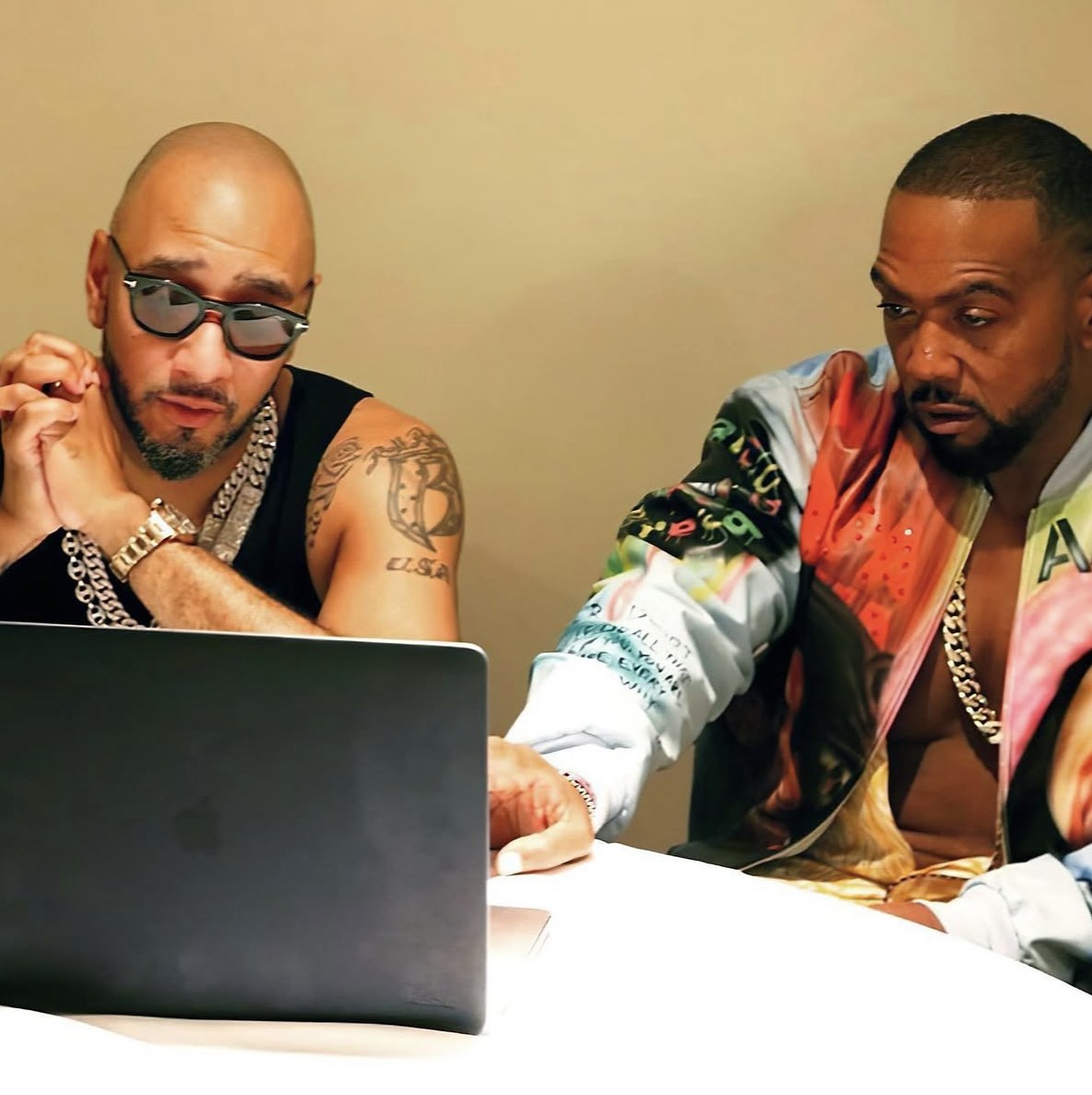
There are two kinds of company in the culture business. One distributes content. The other
mints property. They look identical from the outside and they are priced by completely different
arithmetic — and in March 2021, the most important cultural instrument built during the pandemic was
sold at the wrong one.
This report is written for the people who built it. It puts a number on $VERZUZ. It names the specific
pricing error that let a nine-figure heritage asset trade for mid-eight figures. And it argues that the
lesson is not "they got a bad deal" — the lesson is structural. A property with no
registry entry has no price of its own, so it gets valued using someone else's comparables. Verzuz was
valued against short-form video apps. It should have been valued against a catalog.
Why this file exists
Verzuz did not lose value. It was never measured.
Nothing in this brief argues that Swizz Beatz and Timbaland made a foolish deal. In March 2021 there was
no instrument on earth that could have told them what Verzuz was worth as cultural property, because the
asset class did not formally exist. They negotiated brilliantly inside a market that had no category for
what they had built. That is precisely the gap the Cultural Property Rights Standard closes — and
the reason this file is published as education rather than critique.
01 — The Event
A format invented inside a lockdown
On March 24, 2020, with most of the United States under stay-at-home orders and every venue in the country
dark, Timbaland and Swizz Beatz opened Instagram Live and played records at each other. There was no
production company, no broadcast partner, no rights clearance, no budget. Two producers, two phones, and a
catalog. Within weeks it had a name, a logo, an official account and a trademark — the Verzuz mark was
filed in April 2020, registered by Timbaland.
The mechanism is worth stating precisely, because the mechanism is the asset. Two artists play twenty of
their own records, one at a time, and narrate the making of each one before it plays.
The audience gets the song and the authorship in the same breath. No winner is declared. As Swizz put it to
ABC News: "The people won, the culture won, music won."
What that produced was not a show. It was a machine that converts undocumented cultural authorship into a
recorded, timestamped, publicly witnessed primary source — episode after episode, for six years,
across roughly ninety catalogs of Black American music. There is no other instrument that does this. Not
an awards show, not a documentary, not a label archive. Verzuz is the only place where the person who made
the record says, on the record, how they made it, in front of millions of people, and it is captured.
First broadcast
Mar 2020
Instagram Live
Battles to date
50
Through Aug 20, 2026
Peak concurrent
1.8M
Gucci Mane vz Jeezy
Single-battle impressions
7B+
Gucci Mane vz Jeezy
The scale arrived fast and it arrived at a moment when nothing else could. Brandy vz Monica became the
first livestream webcast to pass 1.2 million concurrent viewers, drew 4.2 million total on the Verzuz
channel plus 1.8 million on Apple Music, and generated over a million tweets in the United States —
more than the 2020 VMAs. Gucci Mane vz Jeezy hit 1.8 million concurrent, 5.5 million total and 7 billion
impressions. Ashanti vz Keyshia Cole took the record at 6 million total viewers and drove 11.3
million incremental on-demand streams across the two catalogs, per MRC Data.
The institutional recognition followed the numbers. A Webby "Break the Internet" award in May 2020. The
BET Shine A Light Award. Bloomberg Businessweek's 50 Most Influential — "the people who changed
global business" — in December 2020. Rolling Stone's Future 25. The NAACP Image Award for
Outstanding Variety Series in 2021. A format born on a phone was, within twelve months, a
nationally-awarded television property.
"VERZUZ has always been a platform that is by the artists, for the artists and with the people."
Swizz Beatz & Timbaland — joint statement, September 2022
That sentence is the thesis of the whole enterprise, and it is also the sentence that makes the ownership
question load-bearing. A platform that is by the artists is a claim about title, not about tone.
It only survives if the title actually sits with the artists — which is exactly what the next eighteen
months put in question.
02 — The Mispricing
Priced as a content platform. Built as an asset generator.
In March 2021, Triller Network acquired Verzuz. Swizz Beatz and Timbaland became large shareholders and
"brand visionaries," joined the management team, and allocated a portion of their equity to the 43 artists
who had appeared on the series to that point — John Legend, DMX, Alicia Keys, Patti LaBelle, Erykah
Badu, Jill Scott, Brandy, Monica, Gladys Knight, D'Angelo, RZA, DJ Premier and more. The consideration was
undisclosed; The Hollywood Reporter later put it in the mid-eight figures, cash and stock.
Triller subsequently stated it had paid "over $50 million in cash and stock to-date."
Read the buyer, not the price. Triller was a Los Angeles short-video app positioned as the American
alternative to TikTok, competing for creators on a daily-active-user scorecard, and pointed at a public
listing. Companies like that are valued on engagement metrics: MAU, DAU, session length, ad inventory,
creator supply. When such a company acquires something, it prices it as content that will produce
those metrics.
So Verzuz was priced as content. Content is a cost line that decays: you buy a library, it draws
attention, the attention amortizes, you buy more. Under that model, a mid-eight-figure price for a
livestream series with big view counts is not unreasonable. It is a perfectly rational number for the wrong
asset.
Because Verzuz is not content. Verzuz is a generator that mints a distinct, dateable,
multi-party cultural property every time it runs. Each episode is a new original work: a set of
performances, a set of first-person authorship testimonies, a documented meeting between two catalogs, and
a permanent primary source about how a body of music got made. Fifty of those exist. Not one of them has a
title, a registry entry, a score, or a settlement layer of its own.
The category error, stated plainly
A content platform is priced on its audience. An asset generator is priced on its output.
Netflix is priced on subscribers. A record label is priced on its catalog. Verzuz was sold using the
first method and built using the second. The distinction is not semantic — it is roughly an order
of magnitude. A property that produces titled, revaluable assets on a recurring schedule carries a
multiple on issuance, not on impressions. Under CPRS, an issuance property with
Verzuz's dimensional profile does not clear at mid-eight figures. It does not clear in eight figures at
all.
And the flaw compounds in the second-order term. When a Culture Maker sells cultural property outright,
the property does not merely change hands — it leaves the culture's balance sheet
permanently. Every future episode, every future revaluation, every future AI licensing event and
every downstream derivative is minted onto someone else's title. A license transfers use for a term. A
sale transfers the mint.
What actually happened next
By January 2022 the payments stopped. On August 16, 2022, Timbaland and Swizz Beatz filed suit in Los
Angeles County Superior Court seeking over $28 million. Per reporting on the complaint, each was due
roughly $9 million by mid-March 2022, followed by $500,000 apiece per month for ten months; the suit
alleged none of it arrived. Triller disputed the claim and floated a $50 million countersuit. The parties
settled amicably in September 2022, with the participating artists receiving an increased ownership stake.
Then the thing that actually cost the most happened, and it never appeared in any filing: the show
stopped. Verzuz went dark for roughly three years. A property whose entire value engine is
recurring issuance simply stopped issuing. In asset terms that is not a dispute — it is an
impairment, and it is the single largest destruction of value in this file.
By June 2024, Swizz and Timbaland had reacquired Verzuz and announced an exclusive distribution
partnership with X, keeping full creative control and ownership. In October 2025 the series returned live
at ComplexCon in Las Vegas with Cash Money Records vz No Limit Records, streaming on Apple Music and
Apple TV, and has run steadily since — Hit-Boy vz Mike WiLL Made-It, Tank vz Tyrese, Rick Ross vz
French Montana, B2K vz Pretty Ricky, The Game vz YG, and Joe vz Donell Jones on August 20, 2026. The
generator is running again.
▲ The registry tell
In May 2023, ownership had to be clarified on Instagram Live
Swizz Beatz went live to state that "VERZUZ is still 100 percent Black-owned" — "50 percent on the
top of your screen, and 50 percent on the bottom of your screen." He was right, and he should never have
had to say it. A property whose ownership is settled by a livestream is a property without a title. That
is not a communications problem; it is the exact absence a registry exists to fill. Title is the thing
you point at instead of explaining.
Note the counterfactual as well. Triller completed a reverse merger with AGBA Group, a Hong
Kong–based financial-services company, and began trading on Nasdaq as Triller Group in October 2024
— four months after the reacquisition. Had the title not come home when it did, a Black American
cultural property built in a quarantine would have ridden onto the balance sheet of an offshore financial
holding structure as a line item. The margin was four months.
03 — The Valuation
BCPV 82.08 — Tier IV Heritage & Lineage
Scored across the five CPRS dimensions, $VERZUZ returns a BCPV of 82.08 and a
CPRS capture coefficient of 0.8495 after the Cultural Demand Coefficient — a Tier IV Heritage &
Lineage Asset, the framework's museum-grade classification. This is a soft pass: it uses public reporting,
platform-published viewership data and CPRS structural coefficients rather than first-party settlement
data, and carries a confidence factor of 0.70 with TCPMV presented as a band.
| Dimension | Weight | Score | Weighted |
|---|
| CISCultural Influence | ×0.30 | 96 | 28.80 |
| CCIConsumer Conversion | ×0.25 | 88 | 22.00 |
| LIPLikeness & Identity — D3 flagged | ×0.20 | 92 | 18.40 |
| CUVCommercial Usage | ×0.15 | 84 | 12.60 |
| HLMHeritage & Lineage — 1.0–3.0 scale | ×0.10 | 2.8× | 0.28 |
| BCPV | Tier IV · Heritage & Lineage | 82.08 |
CIS 96. Influence is normally measured in reach; here it is measurable in
replication of the form itself. Verzuz did not just draw an audience, it created a format that the
rest of the industry immediately imitated — head-to-head catalog events, league and brand
adaptations including an NFL Pro Bowl edition, and an entire genre of livestream programming that did not
exist in February 2020. When a format becomes a common noun inside eighteen months, the influence score is
not about views. Deduction from a theoretical 100 reflects genre concentration in R&B and hip-hop
rather than any weakness of penetration.
CCI 88. Conversion is documented and unusually clean, because Verzuz produces a
measurable catalog lift with a known trigger date — the effect Billboard named and tracked. Ashanti
vz Keyshia Cole moved 11.3 million incremental on-demand streams. Cash Money vz No Limit reached 270
million and 8.49 million total livestreams across platforms. The score is held below the 90s for a
structural reason, not a demand reason: almost none of that conversion settles to the
property. The streams pay labels and DSPs. Verzuz creates the lift and receives none of it. That
is a capture problem, and capture problems are fixed with title.
LIP 92 — the flagged dimension. The identity surface here is unusually wide: the
Verzuz mark and its sensational spelling, the "vz" convention, the V logo, the two-box split-screen frame,
and — critically — the likeness, voice and first-person authorship narration of roughly ninety
artists across fifty episodes. That last item is the most under-documented asset in the entire file, and it
is the one AI systems want. D3 is where the property is widest and the paper is thinnest.
CUV 84. Commercial usage is real and proven — a registered trademark from month
one, an Apple Music and Twitter partnership after a bidding war in August 2020, sponsor integrations
including Ciroc and a mandated Roland equipment standard, an acquisition, an X distribution deal, and an
Apple TV/Apple Music/ComplexCon configuration in Season 3. The score is discounted for
discontinuity: a three-year issuance gap and a disputed sale are exactly the kind of history that
a commercial-usage score is designed to penalize.
HLM 2.8× on the 1.0–3.0 scale. The highest heritage multiple MADE CX has assigned to a
property under ten years old, and it is warranted by function rather than age. Verzuz sits in a direct
lineage — Jamaican sound-clash, Bronx park-jam DJ battles, the Hot 97 Summer Jam producer clash in
2018 — and it performs that lineage rather than merely descending from it. More than that,
it is a lineage-transmission instrument: Gladys Knight and Patti LaBelle, Fred Hammond and Kirk Franklin,
Cash Money and No Limit, elders narrating their own authorship to an audience that was not alive for the
first release. That is museum work executed as live programming.
From five dimensions to one number
Step 1 — Base Cultural Property Value
Step 2 — Cultural Demand Coefficient
The blend matters. A pure Music & Entertainment read (3.0×) understates Verzuz, because thirty percent
of what the property produces is not music programming at all — it is structured,
high-fidelity, first-person authorship data: fifty episodes, roughly 140 hours, of named creators
explaining named works on camera. That is a Tech / AI Data asset at a 4.5× multiplier, and it is the layer
no deal in this property's history has ever priced.
Commerce base
$750M
Observable, modeled 2020–26
Capture coefficient
0.8495
BCPV × CDC 1.035
Modeled TCPMV
$640M
$460M – $880M
Unaccounted
~$590M
vs. sale consideration
TCPMV applies the CPRS capture coefficient to an observable commerce base of roughly $750M — the
modeled, attributable slice of commerce the property has moved across six years and fifty battles. The
result is a modeled TCPMV near $640M, presented as a band of $460M to $880M at a
confidence factor of 0.70. Set against a mid-eight-figure sale consideration, that is an order-of-magnitude
gap — and the gap is not a negotiating failure. It is the arithmetic difference between pricing an
audience and pricing an issuance.
04 — The Stack
Who captured the value, and in what order
Every cultural property of this reach has an economic stack beneath it. With Verzuz the stack is unusually
legible, because the property has a clean trigger — a dated episode — and the lift shows up in
other people's numbers within days. Each sector base below is a modeled, attributable estimate of commerce
the property moved between March 2020 and August 2026, before the capture coefficient is applied.
| Sector | What the property moves | Base | Capture |
|---|
| CatalogLabels & DSPs | Documented streaming and sales lift across ~90 re-activated catalogs — the Verzuz Effect. Settles entirely to rightsholders and platforms. | $210M | $178M |
| PlatformsIG · Apple · X · Triller · Fite | Attention and subscriber-acquisition value from 40M+ live viewers and 30B+ impressions across the series. | $165M | $140M |
| LiveTouring & events | Booking-fee and demand uplift for participating acts; ComplexCon Las Vegas gate; catalog artists returned to the road. | $120M | $102M |
| M&ATriller equity | Acquisition consideration plus the enterprise-value narrative Verzuz carried into a public-listing story. | $95M | $81M |
| BrandSponsorship & integration | Ciroc, Roland, Apple and category sponsorships across fifty episodes and three seasons. | $75M | $64M |
| DerivativeFormat & merch | Format imitation and licensed adaptations including the NFL Pro Bowl edition; merchandise and adjacent programming. | $45M | $38M |
| ArchiveAI-trainable data ▲ | ~140 hours of named-creator authorship testimony, voice and likeness. Structurally unpriced. | $40M | $34M |
| TOTAL | Observable commerce · capture coefficient 0.8495 | $750M | $637M |
Layer 01 · Originator
Swizz Beatz & Timbaland
Built the format, hold the mark, and today hold the title back. Across six years they captured the
sale consideration, sponsorship participation and distribution economics — real money, and
against a modeled $640M property, a minority slice of what the instrument they invented has moved.
Captured value: consideration + participation
Layer 02 · Rightsholder ▲
Labels & Publishers
The largest single capture in the stack and the one with the least friction. Verzuz re-activates a
dormant catalog on a known date; the resulting streams settle to the master and publishing owners
automatically. No Verzuz license is required, requested or paid. The trigger is free.
Captured value: catalog lift, unlicensed
Layer 03 · Distribution
Instagram, Apple, X
Each hosted the property at a moment it needed one, and each converted it into attention, subscription
and platform prestige. Apple's 2020 partnership was a first for the service. The distribution layer
performed — and it is the layer where a license, not equity, is the correct instrument.
Captured value: engagement + subscriber lift
Layer 04 · Acquirer
Triller Network
Bought a nine-figure heritage asset at a content price, held it through a three-year issuance gap,
defaulted on scheduled payments, settled, and returned it. The equity issued to 43 artists was a
genuine and unusual gesture — and it was equity in the buyer, not participation in the property.
Captured value: title, temporarily
Layer 05 · Participants
The 43 Artists
John Legend, DMX, Alicia Keys, Patti LaBelle, Erykah Badu, Jill Scott, Brandy, Monica, Gladys Knight,
D'Angelo, RZA, DJ Premier and more received shares in an acquiring company. When that company's story
changed, so did the value of the instrument they were paid in — while the episodes they made kept
their cultural value entirely.
Captured value: third-party equity
Layer 06 · Derivative ▲
Archive, Voice & AI
Fifty episodes of named artists describing named works in their own voices — the cleanest
music-authorship training corpus outside a label vault, sitting in public, on platforms, with no
registered scope of permitted use. AI/synthetic exposure modeled at 2–5× TCPMV.
Captured value: unstructured, unpriced
D3 ▲ Critical — the archive is the exposure
The most valuable thing Verzuz owns is the thing it never registered
Ninety artists. Fifty episodes. Roughly 140 hours of first-person creative testimony, delivered on
camera, in identifiable voices, about identifiable works — with the songs playing underneath.
For a model trainer this is not a livestream archive. It is a labeled dataset of musical authorship
with provenance attached, and it is the single most AI-trainable cultural corpus produced in the last
decade.
At the CPRS AI extension of 2–5× TCPMV, that exposure models between $1.3B and
$3.2B. Registration does not prevent training. It establishes scope, permitted use and a
price — which is the difference between a claim and a complaint.
05 — Sale vs. License
The same liquidity, without giving up the mint
This is the section that matters, and it is the reason this file was written as a message rather than a
report. The problem in 2021 was never that Swizz and Timbaland needed capital, partners or distribution
— those are legitimate needs and the deal addressed all three. The problem is that the only
instrument available to meet those needs was a transfer of title. There was no licensing
market for cultural property because there was no registry to license against.
So here is the counterfactual, modeled against the same six-year window with the same commercial
objectives. A Tier IV property carrying a modeled $640M TCPMV supports a three-year exclusive distribution
license in the range of 4–5% of TCPMV annually. At 4.5%, that is roughly $28.8M per year.
| Term | Sale — what happened | License — modeled alternative |
|---|
| Cash to originatorsOver the same 3-year window | Mid-eight figures, cash and stock. $28M of it litigated. | ~$86M over three years, cash, scheduled, no equity component required. |
| TitleWho holds the property | Transferred to the acquirer. Recovered only after litigation, settlement and a three-year gap. | Never leaves the originators. Reverts automatically at term. |
| The mintRights to future episodes | Every future episode would have been minted onto the acquirer's title. | Every future episode mints to the property. Licensee gets distribution, not issuance. |
| Buyer defaultWhat happens when payments stop | The asset is inside the defaulting party. Recovery requires suing for your own property. | Default terminates the license. The asset was never encumbered. |
| Artist participationThe 43, and everyone after | Equity in a third-party company — illiquid, dilutable, dependent on that company's outcome. | 80/16/4 at the property level, per episode, paid on the asset the artists actually made. |
| ContinuityIssuance schedule | Three-year hiatus. The generator stopped generating. | Programming continues; a distribution dispute never reaches the format. |
| NET | Less cash, no title, impaired continuity. | ~1.7× the cash · title retained |
Read the first row twice. Under this model the license produces more cash than the sale
did, over the same period, without transferring a single right permanently. That is not a clever
structure — it is what happens when an asset is priced on its own comparables instead of somebody
else's. The sale looked like the bigger number only because nobody had computed the smaller one correctly.
Selling cultural property to solve a liquidity problem is like selling the building to pay the rent. A
license is the rent. The building is supposed to stay.
There is a second reason the license is the right instrument here, and it has nothing to do with money.
Verzuz's entire legitimacy rests on the claim Swizz stated on that Instagram Live — that the platform
is by the artists and stays with the people. That claim is a title claim. Every year the
property sits unregistered, the claim has to be re-asserted in public rather than simply looked up. A
registry entry retires that conversation permanently.
The standing rule
Verzuz should never be sold again
Not as a matter of sentiment — as a matter of asset class. A Heritage & Lineage property that
issues new titled assets on a recurring schedule is a mint, and mints are not sold, they are licensed.
Distribution, sponsorship, format adaptation, archive access, AI training rights, international editions
and brand partnership are all licensable surfaces that produce liquidity. Every one of them can be
structured for a term, priced against a score, and returned. None of them require the title to move.
06 — The Registry
Every episode is a title. Right now none of them are.
The most consequential recommendation in this file is also the least glamorous. Verzuz should be
registered as a parent property, and each of the fifty battles should be registered as its own
titled sub-property, with its own score, its own participants, its own splits and its own
revaluation clock.
This is not administrative tidiness. It is where the value actually lives. Under CPRS modeling, roughly
81% of the parent property's value is minted at the episode level — because the episode is the unit
that carries the performances, the authorship testimony, the two-catalog meeting and the archival record.
The parent holds the mark and the method. The episodes hold the property.
Proposed Registry StructureCPRS · Soft Pass
$VERZUZ Parent — mark, method, catalog & goodwill
82.08 Tier IV · TCPMV $640M
$VZEP · 50 titles Sub-properties — one per battle, Mar 2020 – Aug 2026
$520M Median $8M · top five $28M–$45M
$VZFMT Sub-property — the two-box, twenty-round authorship format
79.40 Tier IV · TCPMV $95M
D3 — Archive, Likeness & Voice Flagged surface — AI/synthetic priority
2–5× $1.3B – $3.2B modeled
Community flow Current state, unregistered
$0 CPRS attribution
Four things change the day those entries exist.
01 · Scope
The title stops being a conversation
Ownership, participants, splits and permitted use are described once, formally, per episode. No future
buyer, partner or platform negotiates from memory, and no co-founder ever has to go live to explain who
owns what.
Replaces: public re-assertion
02 · Price
The next offer has a benchmark
A BCPV score and a TCPMV band mean the next distribution, sponsorship or acquisition approach is
measured against a cultural-property comparable instead of an engagement multiple. That single change
is the whole difference between the 2021 price and this one.
Replaces: the platform comp
03 · Liquidity
Cash without transferring the mint
Registered scope is what makes a license writable. Distribution windows, archive access, format
adaptation and AI training rights each become a priceable, term-limited instrument — liquidity on
demand, title untouched.
Replaces: the outright sale
04 · Return
Participation the artists can actually hold
The 80/16/4 split routes 4% into community reinvestment as a function of structure rather than
generosity — on a modeled $640M TCPMV, roughly $25.6M — and routes artist
participation to the episode they made, not to a third party's cap table.
Replaces: equity in someone else
A note to the Verzuz team
You built the only instrument in modern music that captures authorship at the moment of celebration. Not
an interview, not a documentary, not a plaque — the maker, the record, the story, the room, all at
once, on a schedule. Every episode you run creates a new original cultural asset out of catalog that
already existed. That is a mint, and there are very few of them.
The 2021 deal is not the lesson. The lesson is that the deal had to be priced with the wrong ruler, and
that will be true of the next one too unless the property has an entry of its own. You already won the hard
part back: the title came home, the format is running, Season 3 is issuing on schedule. What is left is the
boring, permanent part — writing it down.
Register the parent. Title the fifty. Score them. Then license everything and sell nothing. Verzuz
is not a content platform that happens to make culture. It is a cultural-asset generator that happens to
distribute content — and the moment that distinction is written into a registry, it stops
being an argument you have to make and becomes a number someone else has to meet.
What got written down was a purchase price. What was never written down was the property — fifty
original cultural assets, ninety catalogs, and the only recorded archive of how they were made.
Markets do not recognize asset classes because the value is self-evident. They recognize them because
someone builds the registry, publishes the method, and makes the first entries. Verzuz should be among the
first entries on Made.cx.
Methodology & disclosure
Soft pass. Modeled from public reporting, platform-published viewership data and CPRS
structural coefficients — not first-party settlement data. The acquisition, the $28M complaint, the
September 2022 settlement, the June 2024 reacquisition and X distribution partnership, and the Season 3
schedule are public reporting. The sector commerce bases are MADE CX models attributable to the property
across March 2020 – August 2026, presented as estimates. A confidence factor of 0.70 is applied
throughout and TCPMV is presented as a band, not a point.
Sale consideration. The 2021 acquisition price was never disclosed. This brief uses
"mid-eight figures" per The Hollywood Reporter's characterization and Triller's own public statement of
"over $50 million in cash and stock to-date," and rounds to ~$50M for comparison purposes only. The
actual figure, its cash/stock composition and the realized value of the stock component are unknown to
MADE CX.
The license counterfactual is a model. The 4–5% of TCPMV annual distribution-license
band and the resulting ~$86M three-year figure are MADE CX modeling constructs used to illustrate
instrument choice. No party offered such a license and none was declined. Nothing here asserts that a
better deal was available in 2021 — the argument is that no pricing instrument existed to identify
one.
Property valuation, not company valuation. TCPMV values the $VERZUZ cultural property
— the commerce the format, mark, archive and episode catalog move across the stack. It is not a
valuation of Verzuz as an operating business, of Triller Group, or of the personal holdings of Timbaland
or Swizz Beatz, all of which sit outside this assessment.
Unaccounted ≠ unpaid. The ~$590M figure describes cultural-property value flowing
without CPRS attribution or community reinvestment. It does not assert that any party was underpaid
beyond the claims made in the 2022 complaint, that any agreement was breached beyond what was publicly
alleged and settled, or that any institution acted improperly.
Report VZ-CX-2608-051. Culture Market Data · MADE CX · August 2026.