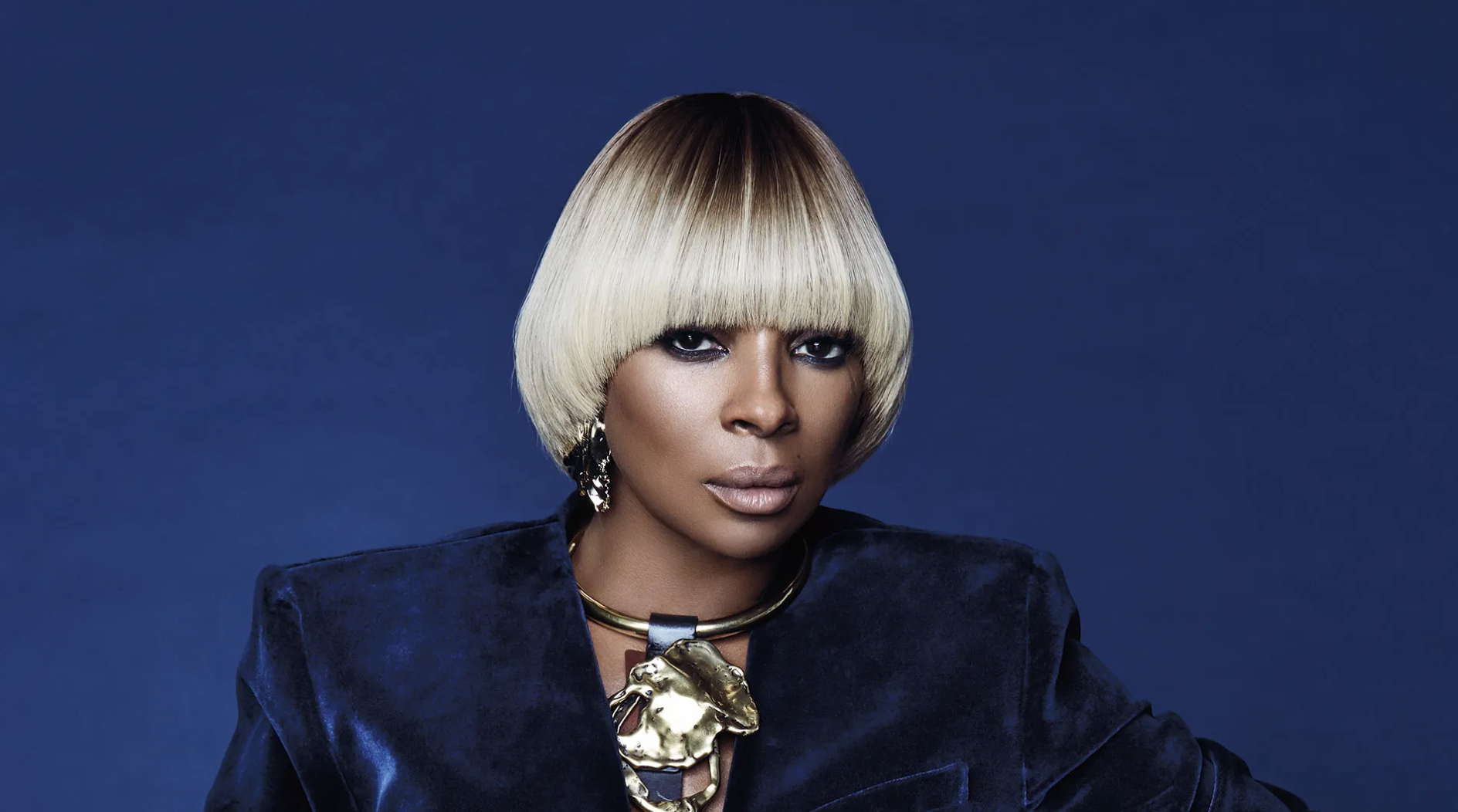
Every time a legend sells a catalog, the music business says out loud what MADE CX has been saying all
along: culture is an asset class. It has buyers, a price and a holding period. On Monday, Primary Wave Music added
the Queen of Hip-Hop Soul to its "Home of Legends." The question this brief asks isn't whether that's a good deal.
It's who holds the upside from here.
This report does three things. It sets out what was announced on October 26, 2026, and what wasn't. It puts a
CPRS™ number on the cultural property underneath the catalog: four decades of voice, persona and lineage that
keep generating value whoever holds the paper. And it makes the case to the buyer, not against it, that the
catalog-acquisition model is missing one instrument, a public record of the culture itself, with a return
that routes back to the originator and the community the music came from.
01 — The Deal
One announcement, undisclosed shares, seven named hits
On Monday, October 26, 2026, Primary Wave Music, which bills itself as "the leading independent
publisher of iconic and legendary music in the world," announced a partnership with Mary J. Blige on her
catalog compositions and recordings. Variety reported the substance plainly: Blige "has sold
undisclosed shares of her publishing and recorded-music assets" to the company. The release, Billboard and iHeart
list the same seven works: "Family Affair," "My Life," "Mary Jane (All Night Long)," "You Bring Me Joy," "Be
Happy," "Be Without You" and "I Can Love You." Neither the price nor the percentage was disclosed.
Deal RecordPublic announcement · 10/26/26
Counterparty Independent publisher; roster includes The Notorious B.I.G., Whitney Houston, Prince, Bob Marley, Luther Vandross, James Brown, Ray Charles
Primary Wave Music "The Home of Legends"
Scope Catalog compositions and recordings across 15 studio albums, per the release; "undisclosed shares," per Variety
Publishing + masters Partial interest
Named works Family Affair · My Life · Mary Jane (All Night Long) · You Bring Me Joy · Be Happy · Be Without You · I Can Love You "and others"
7 named Full schedule not published
Services "New music marketing, branding, digital, and synch opportunities"
4 surfaces Intermediary licensing
Consideration Billboard, Variety and iHeart all report no figure
Undisclosed Not modeled here
Records sold
50M+
Worldwide, per release
Catalog
15 · 83
Studio albums · singles
Grammys
9
From 37 nominations
No. 1 albums
4
Billboard 200
Read the services line the way a rights analyst would. Marketing, branding, digital and synch aren't royalty
collection. They're the intermediary layer: the work of turning a catalog into new licenses,
placements and brand deals. That's where a modern catalog buyer earns its return, and it's the layer this brief
is about.
"To partner with the Queen herself on her extraordinary catalog and her everlasting legacy is an honor for me and
for our entire Primary Wave team."
Natalia Nastaskin, Chief Content Officer, Primary Wave Music
Where this brief stands
A partial sale on undisclosed terms
The deal's price, the percentage sold and the split between publishing and masters weren't disclosed. This
report doesn't estimate them, doesn't judge whether they're fair, and doesn't assert that Primary Wave, Blige
or her team did anything other than make an ordinary market transaction. It describes the cultural property
both sides now share an interest in, and the structure of who holds its upside.
02 — The Proof
A catalog sale is the market saying culture is an asset
For years, the argument for cultural property as an asset class had to be made in the abstract. The catalog
market has made it concrete. A buyer pays today for the right to collect on music for decades. That only works if
the music behaves like an asset: durable demand, licensable rights, and value that compounds after the moment
that made it. By that test, entertainment and the creator economy are already on the asset-class list. Catalogs
are being priced, bought and held.
Primary Wave's own roster shows what the buyer is actually underwriting. It isn't only songs. The publisher's recent
news feed includes a Whitney Houston Barbie with Mattel, a "Bob Marley Hope
Road" experience in Las Vegas, and a coffee collaboration with Sun Records. Those are likeness, persona and
heritage products. The catalog is the entry ticket; the culture is the asset.
- Durable demand. Blige's first single, "You Remind Me," came out in 1992. Primary Wave's chief content
officer still names it as the moment she became a fan. Thirty-four years later, Blige is in a Las Vegas
residency extended through February 2027.
- Licensable surface. The deal names marketing, branding, digital and synch: four ways to sell the same
culture again.
- Compounding. My Life was selected for the Library of Congress National Recording Registry in
2025, three decades after release. Heritage doesn't depreciate.
That's the win, and it's real. A Culture Maker from the Schlobohm Houses in Yonkers was paid as an asset
owner, not just a performer. The rest of this report is about what the transaction structure leaves out.
03 — Four Decades
Heritage grade: the Queen of Hip-Hop Soul, 1988 to now
Blige is a heritage-grade Culture Maker in the precise sense CPRS™ uses: a single originator whose identity is
co-located with a genre she helped invent. Critics credit What's the 411? with fusing R&B and hip-hop
for the mainstream; its 1993 remix album was the first album by a singer with a rapper on every
song, which helped make the rap feature standard practice. The New Yorker's Ethan Brown said her first
two albums invented "the sample-heavy sound that reinvigorated urban radio and became a blueprint for nineties
hip-hop and R&B."
1971
Born in the Bronx. Early childhood in Richmond Hill, Georgia, singing in a Pentecostal church; raised in the Schlobohm Housing Projects in Yonkers on her mother's nursing income.
1988–89
Uptown Records. A mall-booth cassette reaches Andre Harrell. She signs as a backup vocalist, the label's youngest and first female artist.
1992
What's the 411? Executive-produced by Sean Combs. No. 1 R&B album, now 4× Platinum.
1994
My Life. 3× Platinum, eight weeks at No. 1 R&B. Named to the National Recording Registry in 2025.
1997
Share My World. Her first No. 1 on the Billboard 200; "I Can Love You" with Lil' Kim.
2001
"Family Affair." Produced by Dr. Dre. Six weeks at No. 1 on the Hot 100, her first and only chart-topper.
2005–06
"Be Without You." 2× Platinum. Billboard later named it the most successful R&B/hip-hop song of all time: 15 weeks at No. 1, 75 on the chart.
2010
The persona as product. Her fragrance, My Life, sells 50,000 bottles in its HSN premiere and breaks the network's sales records.
2017
Mudbound. Two Oscar nominations, acting and original song, the first person nominated for both in the same year.
2022
Super Bowl LVI. Halftime with Dr. Dre, Snoop Dogg, Eminem, Kendrick Lamar and 50 Cent; a shared Primetime Emmy. TIME 100.
2023
Songs become film titles. Lifetime films Real Love, Family Affair and Strength of a Woman, executive-produced by Blige; Be Happy follows in 2026.
2024
Rock & Roll Hall of Fame. Fifteenth studio album, Gratitude.
2026
Residency and recognition. "My Life, My Story" at Dolby Live, Park MGM, extended to February 2027. Forbes Self-Made 250.
Oct 2026
Primary Wave. Undisclosed shares of publishing and recordings change hands. The catalog is now co-held.
Performance & certifications
The commercial record is deep and verifiable. Billboard counts six Hot 100 top 10s and
14 top 10 albums on the Billboard 200, four of them No. 1s. In 2010 it ranked her the most
successful female R&B/hip-hop artist of the previous 25 years. The studio albums alone account for about
22.2 million US units on reported sales.
What's the 411? 1992 · 4× Platinum
3.5M
No More Drama 2001 · 3× Platinum
3.1M
The Breakthrough 2005 · 3× Platinum
3.1M
My Life 1994 · 3× Platinum
2.8M
Share My World 1997 · 3× Platinum
2.8M
Mary 1999 · 2× Platinum
2.1M
Growing Pains 2007 · Platinum
1.6M
Love & Life 2003 · Platinum
1.0M
Reported US sales of the eight best-selling studio albums, from the Mary J. Blige discography record. Seven more studio albums add about 2.2M.
Eight multi-platinum albums. A single that defined a genre chart for a decade. A debut album the Library of
Congress now treats as national heritage, alongside its follow-up. This is what four decades of compounding
cultural property looks like on paper.
04 — The Catalog Paradox
The deal proves the asset. It also moves the upside.
Here's the paradox. A catalog sale is the strongest market signal that culture is property, and it's also the
moment the originator stops participating in that property's appreciation, at least for the share sold. The
structure is simple. The seller receives one payment today, priced as a multiple of expected future income. The
buyer receives all of the forward upside on the acquired share, from two layers of licensing:
- Traditional licensing. Mechanicals, performance royalties and master income: the cash flows the
multiple was priced on.
- Intermediary licensing. New sync placements, brand deals, digital products and marketing-driven
revivals: the cash flows the buyer creates by working the catalog. This is the "marketing, branding, digital, and
synch" in the release, and it's where an active publisher earns its premium.
On the shares sold, both layers now accrue to the acquirer. If a Primary Wave campaign turns "Family Affair" into
the next Whitney Barbie, that upside was never in the purchase price. And no part of either layer has a
designated route back to Yonkers, to the Schlobohm Houses, or to the communities whose lived experience
Blige turned into the songs.
Catalog sale model
Paid once, then held elsewhere
OriginatorShares sold
One payment
AcquirerTraditional + intermediary licensing
100% upside
Persona & AI surfaceVoice, likeness, style
Unrecorded
CommunityOrigin neighborhoods
$0
CPRS™ ledger model
Recorded once, then participating
Culture MakerEvery registered license
80%
PlatformScoring, title, settlement
16%
Persona & AI surfaceSeverable records
Titled
Community ReturnAllocated by the CX Foundation
4%
"100% upside" refers to the forward licensing upside on the acquired shares only. The size of those shares was not disclosed. The 80/16/4 split applies to participation recorded on the MADE CX ledger.
This is how the catalog market widens the wealth gap: structurally, not by intent. Capital that
can buy at today's multiple keeps tomorrow's appreciation. Originators, disproportionately Black artists from
neighborhoods like Blige's, convert a compounding asset into a one-time payment. The communities that incubated the
sound hold none of it. Nobody has to act in bad faith for that to happen; it's the default when the asset is
sold and the culture isn't recorded.
The fragmented title was already there
Blige's own career shows why. In April 2012 she sang about a Burger King chicken wrap to the tune of her song
"Don't Mind." Universal Music Group pulled the commercial from YouTube over music-licensing issues. The voice was
hers and so was the song, but the title to the recording sat with a label, so the use couldn't clear. Her masters
have moved through Uptown and MCA, Geffen, Verve, Capitol and 300. Now Primary Wave holds a share. Each layer of
the catalog has a holder. The culture as a whole has no record at all.
A catalog sale is the market admitting culture is an asset. A Community Return is the market admitting where it
came from.
05 — The Valuation
BCPV 90.45 — Tier 4 Landmark
Scored across the five CPRS™ dimensions, $MJB returns a composite of 90.45, just above $REESE (90.30) and above
$JUST2OFUS (86.80) in the Culture Market Data series. This is a soft pass. It uses the deal announcement, trade
press, chart and certification records and CPRS™ modeling, not first-party royalty, streaming or settlement data,
and carries a confidence factor of 0.68. The deal consideration is held entirely outside the score.
| Dimension | Weight | Score | Weighted |
|---|
| CISCultural Influence | ×0.30 | 94 | 28.20 |
| CCIConsumer Conversion | ×0.25 | 86 | 21.50 |
| LIPLikeness & Identity — D3 flagged (voice, AI exposure) | ×0.20 | 93 | 18.60 |
| CUVCommercial Usage | ×0.15 | 89 | 13.35 |
| HLMHeritage & Lineage (0–100 raw) | ×0.10 | 88 | 8.80 |
| BCPV | Tier 4 · Landmark | 90.45 |
CIS 94. Influence here is genre-defining. She's credited with marrying hip-hop and R&B for the
mainstream, made the rap feature a format, and is cited as an influence by Adele, Rihanna, Taylor Swift, Sam Smith,
Summer Walker and others. Two albums on Rolling Stone's 500 Greatest, the TIME 100 (2022), a Super Bowl halftime,
the Rock & Roll Hall of Fame and the National Recording Registry are institutional validation at every level.
It's held below the high 90s because much of that influence now circulates as a sound and a template rather than as
attributed use of her work.
CCI 86. Conversion is documented over 34 years: 50 million-plus records, about 22.2 million US
studio album units, eight multi-platinum albums, four No. 1 albums, a 50,000-bottle fragrance launch, the
fifth-highest-grossing R&B tour of 2025, and a residency extended on demand. It's held below 90 because no
streaming or royalty data was available for this pass, and every modeled revenue line below carries an explicit 30%
realization discount.
LIP 93, the flagged dimension. The identity premium is the honorific itself. "Queen of Hip-Hop
Soul" is a title the market uses without explanation. Her voice, her biography and her persona are co-located in the
catalog: songs written from her own life, film roles that earned Oscar nominations, and Lifetime films titled after
her songs. Voice is likeness in audio, which raises the score and raises the D3 flag at the same time.
CUV 89. Commercial use is long and varied: endorsements with Reebok, Air Jordan, Pepsi,
Coca-Cola, Gap, Target, American Express, AT&T, M·A·C, Apple, Burger King and Chevrolet; Carol's Daughter and
Citi; her own fragrance, sunglasses and Sister Love jewelry; a BET first-look deal for Blue Butterfly Productions;
and the Strength of a Woman Festival with Pepsi and Live Nation Urban. The score is held back by fragmented title.
The 2012 Burger King spot that couldn't clear is the documented case, and the Primary Wave share adds another
holder.
HLM 88. The lineage is deep and single-origin: a Bronx-born, Yonkers-raised daughter of a nurse
and a jazz musician, a Pentecostal church voice, Uptown's first woman, and a body of work the Library of Congress
now preserves. It stops short of the 90s because custody of the recordings has passed through at least six labels
and is now co-held with a publisher. The chain is unbroken for the identity, not for the catalog.
Fingerprint note
Heritage-grade identity: CIS and LIP in the 90s, HLM in the high 80s
This is the shape of a living heritage property. Influence and identity peak together because the person and
the genre are hard to separate. It's closest in kind to $JUST2OFUS (86.80), another catalog whose influence
travels further than its credits, but where Withers' song splits identity with Grover Washington Jr.'s
record, $MJB's identity is undivided. That's what lifts LIP eleven points higher. Against $REESE (90.30), a
velocity-led property, $MJB carries more tenure and more heritage. $MJB and $JUST2OFUS both carry HLM in the
100-scale raw form, so those two composites compare point-for-point.
Commerce base
$7.94M
12-month, modeled, net
Blended CDC
3.14×
Music / beauty / fashion / F&B / tech
Modeled TCPMV
$24.9M
$17.4M – $34.4M
Deal consideration
—
Undisclosed · excluded
TCPMV applies a blended Cultural Demand Coefficient to a modeled commerce base of about $7.94 million: the
attributable commerce the $MJB cultural property moves across five sectors in the 12 months from November 2025 to
October 2026. Music & Entertainment at 3.0× carries recordings, publishing and sync. Beauty at 3.2× carries the
fragrance line, Fashion at 3.5× the eyewear and jewelry, Food / Beverage at 2.5× the beverage-sponsored festival,
and Tech / AI Data at 4.5× the platform layer. Weighted, that's 3.14×, or about $24.9 million.
Live revenue from the residency and tour is held outside the base because grosses aren't public.
06 — The Stack
Where $MJB's value moves, and who holds it now
Each line below is a modeled estimate of 12-month commerce attributable to the property, before the CDC is
applied. Every line is shown net of the 30% realization discount because no royalty statements, streaming data or
deal terms were available. Lines held outside the base are shown so readers can see where they sit.
| Sector | What the property moves | Base | CDC | TCPMV |
|---|
| RecordingsMasters · streams · sales | 15 studio albums and 83 singles across six label eras. Net of discount. | $3.50M | 3.0× | $10.50M |
| PublishingPerformance · mechanicals | Co-written compositions; the share now partly held by Primary Wave. Net of discount. | $1.40M | 3.0× | $4.20M |
| Sync & screenFilm · TV · Lifetime titles | Placements and the Lifetime film franchise named after her songs. | $0.84M | 3.0× | $2.52M |
| BeautyFragrance line | My Life and successor scents; Carol's Daughter lineage. | $0.40M | 3.2× | $1.28M |
| FashionEyewear · jewelry | Melodies by MJB; Sister Love, co-founded 2020. | $0.30M | 3.5× | $1.05M |
| Brand & eventsPepsi · Live Nation Urban | Strength of a Woman Festival and Summit; endorsement tail. Routed Food / Beverage. | $0.70M | 2.5× | $1.75M |
| PlatformsUGC · clips · memes | The Super Bowl moments, "Family Affair" dance clips and fan edits. Mostly unattributed. | $0.80M | 4.5× | $3.60M |
| LiveResidency · tour | "My Life, My Story" and the For My Fans Tour. Grosses not public; held outside the base. | — | — | — |
| DealPrimary Wave consideration | Undisclosed. A transfer of existing value, not new commerce. | — | — | $0 |
| TOTAL | Modeled commerce · blended CDC 3.14× | $7.94M | 3.14× | $24.90M |
Layer 01 · Culture Maker
Mary J. Blige
Holds the retained share of her publishing and recordings, plus the identity: voice, name, persona, the
honorific. Her companies (Mary Jane Productions, Beautiful Life, Blue Butterfly) already work the persona
commercially. What she sold is a share of the paper. What she keeps is the property that makes it valuable.
Captured value: retained shares + persona income
Layer 02 · Labels
Uptown/MCA to 300
The masters were made across Uptown and MCA, Geffen, Verve, Capitol and 300, with Matriarch and Mary Jane
Productions as her imprints along the way. The 2012 Burger King takedown is the reminder that the voice and the
recording don't always sit with the same holder.
Captured value: label share of master income
Layer 03 · Acquirer
Primary Wave Music
Now holds undisclosed shares of publishing and recordings, and the mandate to market, brand, digitize and sync
them. On those shares, it captures both the traditional and the intermediary licensing upside. It's also now a
necessary party to any complete record of the catalog.
Captured value: forward upside on acquired shares
Layer 04 · Brand Partners
Pepsi, Lifetime, BET & the endorsers
A long run of brand partners has licensed the persona, not just the songs. These are the clean uses: papered,
paid, credited. They show what clearing looks like when someone asks, and they only cover the uses someone chose
to negotiate.
Captured value: endorsement & production fees
Layer 05 · Community
Yonkers, the Bronx & the hip-hop generation
The neighborhoods and the generation of women whose experience Blige turned into the catalog. Scholars credit
her with a more honest portrait of Black womanhood than the media of her era offered. That's the cultural input.
No part of the stack routes anything back to it.
Captured value: $0 · Community Return unrecorded
Layer 06 · Derivative ▲
Voice, Style & AI
A signature alto, a named genre and four decades of vocal recordings are exactly what generative systems imitate
best. AI and synthetic exposure is modeled at 2–5× TCPMV, or $50M–$125M. A "Mary J.-style"
vocal over a 1994-style beat needs no sample and, today, no clearance.
Captured value: unstructured, unpriced
D3 ▲ Critical — AI & synthetic exposure
The catalog changed hands. The voice didn't get a record.
Primary Wave's deal covers compositions and recordings. It doesn't, on any public account, create a title to
the Blige voice or vocal style as a severable property, and no registry does either. That's the surface a
synthetic market reaches first. Every new catalog owner raises the stakes: a well-funded marketing push makes
the sound more recognizable, and recognizability is exactly what AI exposure scales with. Register
$MJB.AI before the next campaign, not after the first synthetic hit. Registration doesn't stop
replication. It gives the holder something to enforce with.
07 — For the Home of Legends
What CPRS™ gives the buyer, not just the seller
This brief is addressed as much to Primary Wave as to anyone. The company already treats legacy music as
culture: Barbies, Vegas experiences, documentaries, brand collaborations. It's the closest thing the catalog
market has to a Culture Steward. CPRS™ is the standard that makes that stewardship measurable, and it turns the
gap in Section 04 into a competitive advantage for whoever closes it first.
01 · Underwrite
A common score for every legend on the roster
BCPV gives Biggie, Whitney, Prince, Luther, James Brown, Ray Charles and now Mary J. Blige a comparable,
version-stamped measure of cultural value alongside the royalty multiple. Diligence gets a second axis: not
just what a catalog earned, but what its culture can still carry.
Adds: cultural diligence to the multiple
02 · Title
Register the persona before AI does
Primary Wave already licenses likeness: a Whitney Houston Barbie is persona as product. A registry entry for
$MJB.AI, scoped with the artist, turns voice and style into a titled property the partnership can license and
enforce, instead of a diffuse risk to every campaign.
Adds: an enforceable AI surface
03 · Differentiate
Win the next legend with a Community Return
Catalog buyers compete on price and service. A buyer that writes a CPRS™ Community Return into its deals
competes on legacy too. On a modeled $24.9M TCPMV, 4% is about $1.0M routed by the CX
Foundation to Health & Wellness, Culture Alignment, Entrepreneurship and Sustainable Communities. That's a term
an originator remembers.
Adds: a reason to choose this buyer
04 · Report
Culture Market Data for the whole catalog
Every intermediary deal Primary Wave strikes (a sync, a brand, a digital product) becomes a recorded use on a
public ledger, priced against a benchmark. The partnership can show the artist, the estate and the market
exactly how the culture is performing, not just the royalty line.
Adds: an auditable record of stewardship
How $MJB would register
Following the series convention, the Blige career registers as a parent property: catalog, voice and persona.
The landmark works register as their own records, and the voice is severed as an AI entry before any further
synthetic exposure. Primary Wave sits at the table as co-custodian of the acquired shares. The AI entry rests on
the artist alone and is the priority.
Proposed Registry StructureCPRS™ · Soft Pass · Conf. 0.68
$MJB Parent — career catalog, voice, persona and the "Queen of Hip-Hop Soul" identity
90.45 Tier 4 · TCPMV $24.9M
$MJB.411 What's the 411? + Remix (1992–93) — the hip-hop soul template and the first rapper-on-every-song album
Scoping Lineage record
$MJB.MYLIFE My Life (1994) — National Recording Registry, 2025
Scoping Heritage record
$FAMILYAFFAIR "Family Affair" (2001) — Hot 100 No. 1, six weeks; now a Lifetime film title
Scoping Co-held · Primary Wave
$MJB.AI Severable AI / synthetic surface — voice and vocal style. Register first.
2–5× $50M–$125M unrealized
Community Return Current state, unregistered · 4% at modeled TCPMV ≈ $1.0M
$0 CPRS™ attribution
Execution constraint — primary gate
Undisclosed shares across a co-held catalog
A complete $MJB record needs to know who holds what. The Primary Wave percentages, the split between publishing
and masters, the full schedule beyond the seven named songs, and the label ownership of each master era aren't
public. Those documents, and Primary Wave's consent as co-custodian, are the first fields a Day-0 registration
would capture and the first things to review before any figure here is acted on. The $MJB.AI entry is the
exception: it rests on the artist's identity alone and can move first.
The catalog sold for an undisclosed sum. The culture behind it has never had a price, a title or a return.
That's the asset still on the table.
Mary J. Blige getting paid as an asset owner is a win, and Primary Wave betting on her for the long term is a
vote of confidence in culture as property. Both things can be true while the structure still leaves the most
valuable layer unrecorded and the originating community out of the return. That's not a failure of this
deal. It's a missing piece of market infrastructure.
Markets don't recognize asset classes because the value is self-evident. They recognize them because someone
builds the registry, publishes the method and makes the first entries. The catalog market has proven the asset.
MADE CX built the financial infrastructure for $CULTURE to function, as property.
Methodology & disclosure
Soft pass. Modeled from the public deal announcement, trade press, chart and certification
records and CPRS™ modeling, not first-party royalty, streaming or settlement data. Deal facts, named works, the
services language, catalog counts (15 studio albums, 2 live albums, 83 singles), awards, the 50 million-plus
records figure, the National Recording Registry selection and the Nastaskin quote are from Primary Wave's release
(Oct 26, 2026). "Undisclosed shares of her publishing and recorded-music assets" is Variety's reporting (Jem Aswad,
Oct 26, 2026). Hot 100 and Billboard 200 counts and the 4× Platinum certification for What's the 411? are
from Billboard (Chris Eggertsen, Oct 26, 2026); iHeart/Channel 955 (Oct 26, 2026) supplied residency dates and
roster context. Biography, legacy, ventures, endorsements, the 2012 Burger King takedown and the Forbes Self-Made
250 listing are from the Mary J. Blige Wikipedia entry; album sales and certifications from the Mary J. Blige
discography entry. Primary Wave roster and news items are from primarywave.com. Confidence factor 0.68. TCPMV is
presented as a band ($17.4M–$34.4M), not a point.
Source reconciliation. Sources differ on two figures. Records sold: the release says 50 million-plus;
the discography entry estimates over 100 million. This brief uses the conservative 50 million. What's the 411?:
the biography entry says 3× Platinum; Billboard and the discography entry say 4× Platinum. This brief uses the
more recent 4×. The 22.2 million US studio-album units total sums the reported sales column for 12 studio albums;
three recent albums have no reported US sales figure and count as zero.
Window, discounts and routing. The commerce base is a MADE CX model of attributable commerce over a
12-month window (Nov 2025–Oct 2026), presented as an estimate. Every line carries an explicit 30% realization
discount because no royalty statements, streaming data or licensing terms were available. Fragrance is routed Beauty
(3.2×); eyewear and jewelry Fashion (3.5×); the beverage-sponsored festival and endorsement tail Food / Beverage
(2.5×); the platform line Tech / AI Data (4.5×); recordings, publishing and sync Music & Entertainment (3.0×). Per
series convention, sector multipliers are applied directly to the commerce base. HLM is carried as a 0–100 raw score
at 10% weight inside BCPV. Live revenue is excluded because grosses aren't public.
Deal consideration excluded. The Primary Wave purchase price and percentage are undisclosed. They
aren't estimated, aren't in the commerce base, and aren't implied by any figure here. A catalog sale transfers
existing value; it isn't new commerce generated by the property.
"100% of the upside." Statements that the acquirer captures all forward licensing upside apply only to
the shares it acquired, under ordinary catalog-purchase structures. The actual terms, including any retained
participation, reversion or profit-share for the artist, aren't public and may differ.
Tier placement. Tier is placed from the modeled TCPMV band (Tier 4 · Landmark, $2M+). HLM 88 sits in the
heritage range typical of Tier 4 records, so this is both a band and a heritage placement.
Property valuation, not catalog value. TCPMV values the $MJB cultural property, meaning the commerce the
culture moves across the stack. It isn't an appraisal of the catalog, of the shares sold, or of any company, and it
isn't a price, an acquisition multiple or investment advice.
Unaccounted ≠ unpaid. References to unattributed value, wealth-gap dynamics and $0 Community Return
describe how value flows without CPRS™ attribution or community reinvestment. They don't assert that Mary J. Blige
was underpaid, that Primary Wave Music or any label acted improperly, or that any agreement was breached. This is an
independent analysis, not affiliated with or endorsed by Mary J. Blige, Primary Wave Music or any company named.
Brand names are used descriptively. Portrait used for editorial identification.
Report MJB-CX-2610-032. Culture Market Data · MADE CX · October 27, 2026. Soft valuation, not an
appraisal, not a registered record, not investment advice.