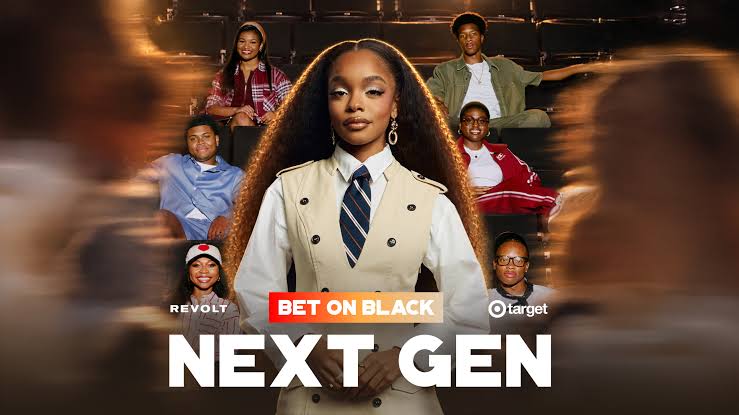
REVOLT measures Bet On Black like a media plan: impressions against goal, pre-roll against goal, views per episode. Those numbers are real, and the show beats them. But they measure the audience. They don't measure what the format makes, which is a new class of Black-owned businesses every season, on camera, with a documented origin.
A content business gets valued on its audience. An asset generator gets valued on what it produces. Bet On Black is an asset generator. It has run for six seasons, it outlived the budget line it was born in, and every season leaves a permanent record of founders, brands and capital behind it. None of that has a registered value of its own. So every renewal is negotiated with a media ruler, against a property that the media ruler can't see.
This soft pass does four things. It reads the show's own reporting for what it actually measures. It scores the Bet On Black format across the five dimensions of the Cultural Property Rights Standard™ (CPRS™). It models what the property moves as a band, not a point. And it lays out how the next presenting partnership can be structured as a license, with community reinvestment written in as protocol rather than granted as charity.
Bet On Black isn't undervalued. It has never been measured as property.
Nothing here suggests REVOLT or Target struck a bad deal. When the show launched in January 2022, no instrument existed that could value a format as cultural property, because the asset class had no registry. Both sides built something rare inside a market with no category for it. This brief is written for the team that built it, as the opening of a registration conversation.
A pitch show where founders get funded and keep 100% of their equity
REVOLT and Target announced Bet On Black in December 2021, and it launched on January 10, 2022, with $500,000 in funding and a $200,000 grand prize. Target had already sponsored at least three other REVOLT series. From the start the terms were unusual: no equity taken. Founders kept full ownership and control of what they brought to the stage.
Season 6 premiered on October 20, 2026, and goes further. Host Marsai Martin, executive producer Kenya Barris (his first project as vice chair of REVOLT Labs), and a mentor bench of Ryan Wilson, Reginae Carter, Brandon Blackwood, Ashley M. Fox and Jewel Burks Solomon. The single-winner model is gone. Every founder in the HBCU class shares a $500,000 growth fund and keeps 100% of their equity.
“Black entrepreneurs don't have a shortage of talent, ideas, or ambition. They have a shortage of capital. ‘Bet on Black’ was built to help turn Black entrepreneurship into Black wealth by putting real checks behind Black-owned businesses.”Detavio Samuels · CEO, REVOLT & Offscript Worldwide · October 2026
Every number in the case study is a media unit
The clearest view of how Bet On Black gets valued is the Season 5 Shorty Awards entry, where the show reports its own results. The numbers are strong, and every one of them is a delivery against a media plan.
| Season 5 reported metric | Delivered | Goal | Unit |
|---|---|---|---|
| Social impressions | 64M | ~16M | Media |
| YouTube views | 11.9M | — | Media |
| Display impressions | 14.0M | 13.1M | Media |
| Pre-roll impressions | 8.8M | 8.1M | Media |
| REVOLT.tv impressions | 7.0M | 6.5M | Media |
| HPTO impressions | 5.5M | 5.0M | Media |
| Positive comment sentiment | 86% | — | Media |
| Founder businesses created or advancedValue of the property the season left behind | Not reported | — | Property |
Read the units, not the numbers. A media ruler measures what an audience saw and when. It has no column for what the show produced. Under that ruler, the 27-episode YouTube library, about 37.4M lifetime views, reads as roughly $0.37M–$0.74M of ad inventory at a $10–$20 CPM. That's what Bet On Black looks like when it's valued as content.
The origin explains the ruler. Bet On Black was born inside a sponsor's commitment to spend a share of its media budget with Black-owned media. So it was valued as a media buy: a budget line that decays at the end of each flight and has to be bought again.
The format outlived the budget line it was born in
In January 2025, Target wound down several of its diversity goals, including parts of its $2 billion REACH commitment. Bet On Black was renewed anyway, twice. Season 5 shipped later that year and beat every media KPI. Season 6 grew the founder pool five-fold, to $500,000. A media buy tied to a program that ended would have ended with it. A property that keeps getting renewed after its original rationale is gone has commercial value of its own. That is the case for licensing it as property.
Capital & reach
- Founder capital: $3.19M across six seasons, no equity taken
- Media weight: HPTO, pre-roll, display and billboard flights
- Brand halo: a national retailer's name on the founder class
The property
- The format and mark: Bet On Black, six seasons running
- The class: 50+ founders, now an HBCU pipeline
- Talent and production: Marsai Martin, Kenya Barris, a 90% Black crew in Atlanta
- Distribution: linear, YouTube (3.33M subscribers), revolt.tv, Peacock and Pluto TV
The value
- A registered value for the format
- Who holds the mark, format and footage rights
- Founder likeness and AI scope in the releases
- A comparable for the next renewal to meet
A content company is valued on its audience. An asset generator is valued on what it produces.
Netflix is valued on subscribers. A record label is valued on its catalog. Bet On Black is sponsored using the first method and built the second way. Each season issues a dated, documented class of founder brands, a primary record of how each one was pitched and funded, and a fresh round of evidence that the format converts. The same mistake cost the creators of $VERZUZ: a recurring cultural mint got valued against short-form video apps instead of a catalog. A property with no registry entry gets valued with someone else's comparables.
BCPV 71.70, Tier 4 Landmark
This soft pass uses public record only: the Season 6 coverage (October 20, 2026), REVOLT's “Bet On Black by the Numbers,” the Season 5 Shorty Awards entry, the YouTube playlist (27 videos, viewed November 4, 2026), IMDb, the original 2021 launch reporting, and public statements from Detavio Samuels. No REVOLT, Target or production figures were available, so the confidence factor is 0.68.
| Dimension | Weight | Score | Contribution |
|---|---|---|---|
| CISCultural Influence | ×0.30 | 73 | 21.90 |
| CCIConsumer Conversion | ×0.25 | 66 | 16.50 |
| LIPLikeness & Identity · D3 flagged | ×0.20 | 70 | 14.00 |
| CUVCommercial Usage | ×0.15 | 78 | 11.70 |
| HLMHeritage & Lineage · 0–100 raw | ×0.10 | 76 | 7.60 |
| BCPVBlended CDC 0.959 → index 68.74 | 71.70 |
CIS 73. Influence is measured, and third parties back it up. The 27-episode library holds about 37.4M YouTube views. Season 5 alone drew 64M social impressions with 86% positive sentiment and made the Shorty Awards Branded Series finalists. The show runs across REVOLT linear, YouTube, revolt.tv, Peacock and Pluto TV, and draws a bench of mavens including Master P, Pinky Cole, Baron Davis, T-Pain and Bun B. It stays below the high 70s because the pitch-competition form isn't original to it, and its reach sits mostly inside REVOLT's own audience.
CCI 66. The strongest conversion evidence is settled capital: $2.69M paid to founders through Season 5 and a $500K pool for Season 6. Renewal after renewal is a second settled signal. It's held down because no founder sell-through, retail placement or revenue lift has been published. Under the pipeline-is-not-sales rule, exposure isn't counted as conversion.
LIP 70, the flagged dimension. The identity surface is wider than one personality. It includes the Bet On Black name and look, host and executive producer likeness, a mentor bench, and the faces, voices and on-camera business plans of more than 50 founders. That last layer is the least documented and the most exposed. D3 is flagged on that basis.
CUV 78, the top dimension. Commercial use is proven and repeated: one presenting partner across six consecutive seasons, including two renewals after that partner's diversity program was wound down; distribution on Peacock and Pluto TV; a branded-series award finalist; and a cross-platform release window. It stops short of the 80s because the format has never been licensed outward, the mark's filing status isn't confirmed, and every commercial relationship runs through a single partner.
HLM 76. The lineage is long and specific. Bet On Black descends from the National Negro Business League (1900), Black Wall Street, and generations of HBCU business pipelines. Since Season 5 it has drawn its class entirely from HBCUs, including Howard, Morehouse, Spelman, Clark Atlanta, FAMU, Grambling State and Texas Southern. It is produced in Atlanta by a 90% Black crew, under a Black-owned company whose largest shareholder group is its employees. It's held in the 70s because the format is four years old and custody is shared with a sponsor and, in Season 1, a co-producer.
Institution-shaped: no dimension below 66, none above 78
$BETONBLACK has the profile of a format, not a personality. The 12-point spread is the narrowest on the ledger. It is the inverse of $DRUSKI (85.50), where influence and likeness lead and heritage trails, and close to the shape of $VERZUZ (82.08) at a smaller scale. That fits: both are formats that mint a dated property every time they run. Calibration references: $VERZUZ 82.08 (Tier 4), $DILLAGENCE2 79.18 (Tier 4), $RAJAH 67.70. CCI moves first. One season of founder sell-through data would lift the composite past 73.
$12.4M of commerce the format sets in motion
TCPMV measures the commerce a cultural property moves, not REVOLT's revenue or the value of the company. It follows the $VERZUZ method. Take a modeled, attributable commerce base across all six seasons (January 2022 to November 2026), then apply the CPRS™ capture coefficient, which is the composite times the Cultural Demand Coefficient.
| Line | What the property moves | Base | Sector | Captured |
|---|---|---|---|---|
| Presenting partnershipTarget · six seasons | Founder capital ($3.19M documented), production funding and media weight, modeled at about $1.5M a season. | $9.0M | Ent. 3.0× | $6.19M |
| Distribution & audienceLinear · YouTube · Peacock · Pluto | Ad, carriage and licensing value across the 37.4M-view library and its windows. | $3.5M | Ent. 3.0× | $2.41M |
| Founder commerce lift50+ businesses | Sales and brand lift from national exposure: food (S3), beauty (S4), health tech, fashion and wellness (S5–S6). Net of a 30% realization discount on $6.0M, because no sell-through is reported. | $4.2M | Blend 3.34× | $2.89M |
| Archive ▲AI-trainable | About 13 hours of named founders pitching named businesses on camera, with judges' reasoning. Structurally unpriced. | $1.4M | AI 4.5× | $0.96M |
| Total | Blended sector multiplier 3.20× · capture coefficient 0.6874 | $18.1M | 3.20× | $12.44M |
The gap between the content read and the property read is about 17 to 34 times. That gap isn't a negotiating failure. It's the difference between valuing an audience and valuing an issuance. The band runs from $9.0M to $17.2M, well above the $2M Tier 4 floor, so the format is placed at Tier 4 Landmark from its modeled band. The placement is disclosed as band-driven. At HLM 76 the format sits close to the heritage range Tier 4 records usually carry, and the gap closes with every season it stays in single, Black-owned custody.
Look at the per-season figure again. Averaged across six seasons, each one moves about $2.1M of attributable commerce, so every season of Bet On Black, on its own, mints a property at the Tier 4 floor. That's what an asset generator does. It's also why the season, not the episode, is the right unit to title.
Five lines that don't need a new sponsor every year
Today Bet On Black earns through one instrument, a presenting sponsorship renewed season by season. The lines below license what the format has already built. Each band is a modeled annual range for a licensed program, not a quote. Together they come to $2.8M–$7.1M a year, before the AI line.
Presenting license, not sponsorship
Reprice the Season 7 presenting partnership as a term license against the registered band. The partner licenses the format, the mark and the founder class for a window. The founder fund becomes a written term of the license, not a line in a budget.
Format editions across Offscript and beyond
An athlete-founder edition on REVOLT Sports. A gaming-founder edition with 3BlackDot's 128M-subscriber network. HBCU conference editions. International editions for Black founders in the UK, the Caribbean and Africa. Each one licenses the format, not the host's calendar.
Back-catalog licensing
Six seasons and 27 long-form episodes already have windows on Peacock and Pluto TV. Package them for FAST channels, airlines and HBCU business curricula, where a real pitch with real judges is teaching material.
“As Seen on Bet On Black” shelf license
A licensed mark for alumni founder products at any retailer, carrying a royalty back to the format. The founder class becomes a merchandisable portfolio, and the presenting partner gets first position on it.
Campus & homecoming activations
Season 6 has already staged a Clark Atlanta homecoming event. With Six Zeros, a licensed live pitch tour across HBCU homecomings becomes an annual title-sponsorship property.
$BETONBLACK.AI: archive, likeness & pitch data
About 13 hours of founders pitching real businesses, with judges explaining their reasoning, all with provenance attached. Licensed on REVOLT's and the founders' terms, it's the largest line. Left unregistered, it's the most exposed. Modeled at 2–5× TCPMV.
The same $500K, written into the asset
Bet On Black's best feature is also its most exposed. The founder fund is the show's moral center, and it depends on a partner deciding to fund it again every year. When a fund lives in a sponsor's discretionary budget, it moves with that sponsor's news cycle. When it's written into the terms of a license, it moves with the asset.
| Term | Sponsorship · how it runs today | License · modeled alternative |
|---|---|---|
| Who sets the number | The buyer, against a media plan and its CPMs. | The property, against a registered CPRS™ band the buyer has to meet. |
| The founder fund | Re-approved every season from the partner's budget. | A written term of the license that renews with the license. |
| If a budget moves | The show is exposed to programs it doesn't control. | The license runs to term. The format and the fund are never in someone else's budget. |
| Community reinvestment | Discretionary and announced as generosity. | Community Return of 4% settles on every license line automatically, under the 80/16/4 split. |
| Founders | Keep 100% of their equity. Their brand origin isn't recorded anywhere. | Keep 100% of their equity and hold a registered, valued record of their property. |
| REVOLT's owners | Value is booked as sponsorship revenue for one season. | Value compounds in a titled property owned by REVOLT, whose largest shareholder group is its employees. |
| Net | A renewal negotiated on audience. | A license negotiated on property, with reinvestment as protocol. |
On the modeled $2.8M–$7.1M surface, Community Return comes to about $112K–$284K a year, distributed by the CX Foundation across the four CPRS™ impact categories: Health & Wellness, Culture Alignment, Entrepreneurship and Sustainable Communities. That is on top of the founder fund, not instead of it. It also settles on lines that don't exist yet, like format editions, library sales, retail royalties and AI licensing, without anyone having to decide to be generous. That is what reinvestment as protocol means: it's in the structure, not the budget.
It also changes the conversation with brands. A partner that licenses a registered property is buying something, not donating to something. That gives the partnership a commercial reason to exist in any political climate, and it lets REVOLT hold the same terms when it talks to the next partner.
The archive is the exposure
Fifty founders, on camera, explaining their businesses
Every Bet On Black episode records named founders presenting named businesses: their faces and voices, their products, their numbers, and expert judges explaining what makes each business fundable. For a model trainer, that isn't a reality-show library. It's a labeled dataset of Black entrepreneurship with provenance attached, and it sits on public platforms under standard platform terms with no registered scope of permitted use.
The founders hold none of that scope. They kept their equity, but their likeness and their pitches live in footage governed by release terms this brief can't see. Registration doesn't prevent training. It sets scope, permitted use and a price, which is the difference between a claim and a complaint. At the CPRS™ AI extension of 2–5× TCPMV, the exposure models at $24.9M–$62.2M.
- Before the Season 6 finale. Register the parent $BETONBLACK and the severable $BETONBLACK.AI entry. Record the six-season catalog of episodes and founder classes.
- Next 60 days. CPRS™ registration and valuation for every Season 6 founder, titled to the founder, with format attribution to Bet On Black. Review the presenting agreement and founder releases for format, mark, footage, likeness and AI clauses.
- Q1 2027. Move to a Day-0 pass with REVOLT production and partner data to firm up CCI. Take the registered band into the Season 7 presenting renewal, structured as Line A.
The format, the seasons, the founders
Following series convention, $BETONBLACK registers as a parent property covering the format, mark, method and goodwill. The AI surface is split off as its own entry. Each season registers as a dated sub-property, the unit where the value is actually minted. Founder properties are titled to the founders, not to REVOLT. Sub-property composites are scored at registration, not in this pass.
What has to be reviewed first
The presenting agreement is private
This brief can't see who holds the Bet On Black format and mark, what presenting and exclusivity rights run to the partner, how long they run, how renewal works, or who controls the footage. Those terms decide how much of Lines A through F is REVOLT's to license today. REVOLT holds them.
Secondary gates: chain of title for Season 1, where IMDb credits Metallic Pictures alongside REVOLT as a production company; Peacock and Pluto TV license terms and windows; trademark filing status for “Bet On Black” (not confirmed in this pass); founder release forms, especially likeness, voice and AI scope; and host, executive producer and mentor agreements, which limit what Lines B and F can include.